
How To Use Free Forex Signals Like A Pro

TradingCup
JUN 30 2025
Last Updated: February 25, 2026
This article is reviewed annually to reflect the latest market regulations and trends.
Disclaimer: The information in this article is for educational purposes only and does not constitute financial, investment, or trading advice. Copy trading carries substantial risks, including the potential loss of your entire invested capital. Past performance of copied traders or strategies is not a reliable indicator of future results. You may be replicating high-risk trades, overleveraged positions, or strategies incompatible with your financial goals. Always conduct independent research into a trader’s historical performance, risk metrics, and strategy before copying them. Never invest funds you cannot afford to lose. Consult a licensed financial advisor to ensure copy trading aligns with your risk tolerance, financial objectives, and regulatory requirements in your jurisdiction. This article does not endorse specific traders, platforms, or strategies, and all trading decisions remain your sole responsibility.
TL;DR (Too Long, Didn’t Read)
- To start your trading quest, use free signals for the best.
- Don’t just chase high gain, check their risk and feel no pain.
- With a calculated fee, check what your final profit will be.
- Don’t put all your eggs in one trade, a diversified portfolio should be made.
- Review their trades and stay in the know, this is how you’ll watch your money grow.
“We are more often frightened than hurt; and we suffer more from imagination than from reality.” – Seneca
How to Use Free Forex Signals Like a Pro: The Ultimate 2026 Guide

The desire is familiar. You work hard, manage a demanding life, and diligently set aside savings, but you know that to truly build wealth, your money needs to work for you. You hear about the foreign exchange (forex) market, the largest, most liquid financial market in the world, and its immense profit potential. You decide to investigate, only to be confronted by a wall of complexity: candlestick charts that look like a foreign language, economic indicators that shift with every news headline, and strategies that require years of dedicated study to master. The reality is stark: you simply don’t have the time to become a full-time trading expert.
It is in this gap between ambition and availability that a powerful idea emerges: forex copy trading. It presents itself as the perfect solution, a way to participate directly in the markets by leveraging the expertise of seasoned professionals. The concept is seductive in its simplicity: find a successful trader, allocate a portion of your capital, and automatically replicate their trades in your own account. It seems like the ultimate shortcut, a way to access the potential of forex without the steep learning curve. This sets the stage for the central question every aspiring copy trader must face: is this a legitimate strategy for wealth creation, or is it a gilded path to financial disappointment?
What Exactly is Forex Copy Trading (And What Isn’t It)?
At its core, forex copy trading is a form of portfolio management that bridges the gap between novice investors and expert traders. It operates on a simple mechanical principle: a user on a copy trading platform, like TradingCup, selects a “signal provider” or “master trader” whose performance and strategy they find appealing. The user then allocates a specific amount of capital to that trader. From that point on, every trade the signal provider executes, every buy, every sell, every stop-loss adjustment, is automatically mirrored in the user’s account in real-time, scaled to the proportion of capital they invested.
It is crucial to distinguish copy trading from related concepts. It is not merely “social trading,” which can involve a broader community sharing ideas, charts, and analysis without necessarily linking accounts for automatic execution. It is also more specific than “mirror trading,” an older term that often referred to copying a pre-defined algorithmic strategy rather than the live decisions of an individual human trader. Copy trading is direct, real-time, and personal; you are tethering a portion of your financial destiny to the ongoing decisions of another person. The process to begin is often straightforward: register on a platform, fund an account, browse the leaderboard of traders, and select whom to copy.
Is Copy Trading a Golden Ticket? A Reality Check for Beginners
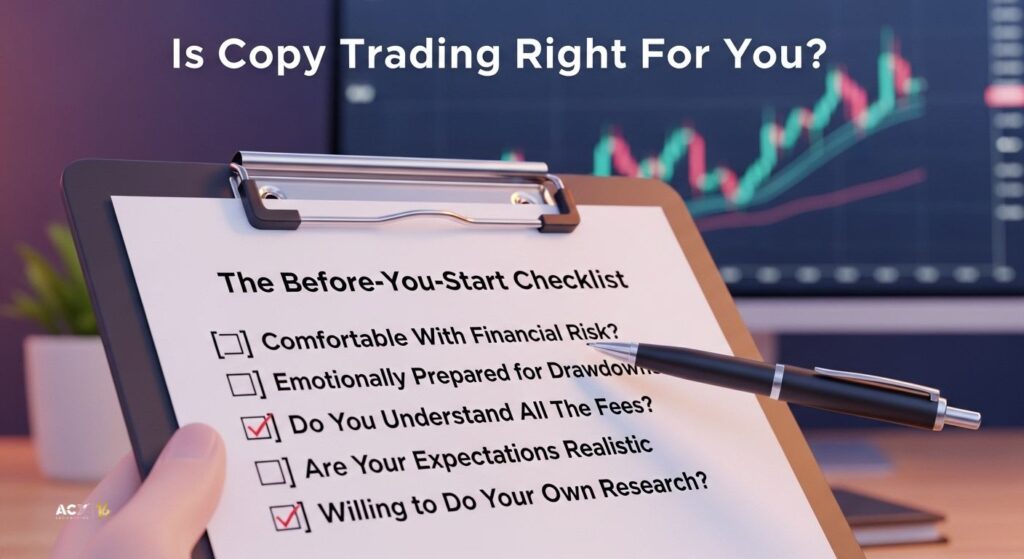
Copy trading isn’t for everyone. Before you jump in, consider this checklist:
- Are you comfortable with risk? All trading involves risk, and past performance is not indicative of future results. Even the best traders have losing streaks.
- Do you have capital you can afford to lose? Never invest money you can’t afford to part with.
- Are you looking for a passive investment? While copy trading is less hands-on, it still requires initial research and ongoing monitoring.
- Do you understand the fee structures? Subscription fees and performance fees can eat into profits.
- Are you patient? Quick riches are rare. Successful trading, even copying, often requires a long-term perspective.
- Are you willing to do your due diligence? Selecting a trader requires careful analysis of their history, strategy, and risk management.
- Do you have realistic expectations? Don’t expect to double your money overnight.
- Are you emotionally prepared for drawdowns? Seeing your account balance dip, even temporarily, can be stressful. Maximum Drawdown (MDD) is a key metric to understand.
If you’ve nodded along to these points with a clear understanding, then XAUUSD copy trading might be a suitable avenue for you to explore.
If the Signal is Free, Are You the Product? Unpacking the Performance Fee Model
In the world of online services, the adage “if you’re not paying for the product, you are the product” often holds true. In the context of copy trading, this needs a slight modification: if the signal subscription is free, your profits are the product. The term “free signals” is compelling, but it’s a specific business model, not an act of charity. It typically means you do not pay a fixed monthly or annual subscription fee to follow a trader. Instead, the signal provider is compensated through a performance fee.
This model is a form of profit-sharing. When you copy a trader and they execute a profitable trade, they are entitled to a pre-agreed percentage of those profits. This fee can range anywhere from 10% to 30%, depending on the trader. On the surface, this seems eminently fair, the trader only gets paid when you make money. However, this structure creates a subtle but powerful incentive that every copier must understand.
Because the fee is calculated on gross profits, it can encourage behavior that prioritizes generating winning trades over sound, long-term risk management. A trader who makes a $100 profit through ten small, carefully managed trades receives the same fee as a trader who makes a $100 profit on a single, highly leveraged, all-or-nothing bet. Yet, the second strategy carries a dramatically higher risk of wiping out the copier’s account. The platform’s fee structure does not inherently penalize this risk-taking behavior; it is up to the user to analyze a trader’s performance history to distinguish between sustainable strategies and high-risk gambles.
Meet the Contenders: A Data-Driven Introduction to 5 Free Signal Providers
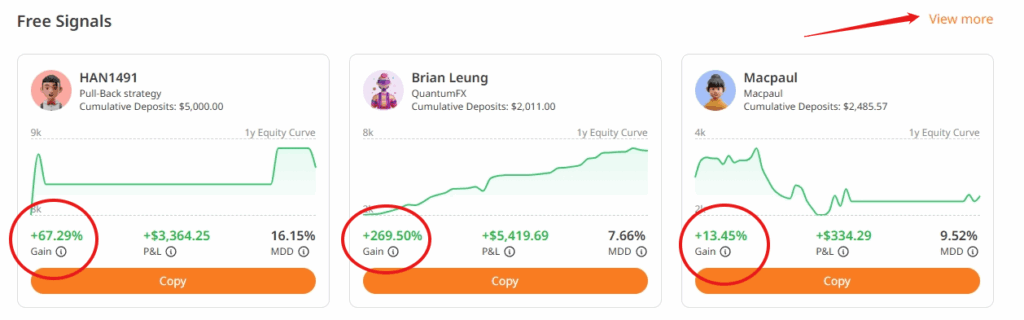
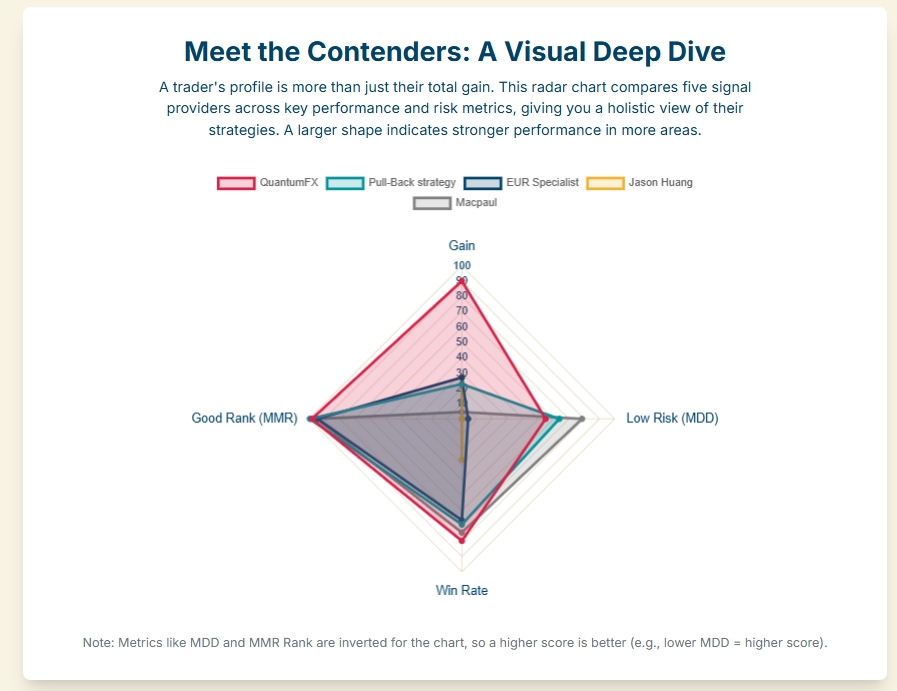
To move from theory to practice, let’s analyze five real-world signal providers available on the TradingCup platform. These traders represent a diverse range of strategies, risk appetites, and performance histories. They will serve as our case studies for the remainder of this guide. Instead of looking at their profiles in isolation, a professional approach demands a direct, side-by-side comparison of their most critical metrics.
The table below consolidates the key performance indicators for each trader, transforming a sea of data points into a clear, comparative decision-making tool. This allows for an immediate understanding of the trade-offs between high returns and high risk.
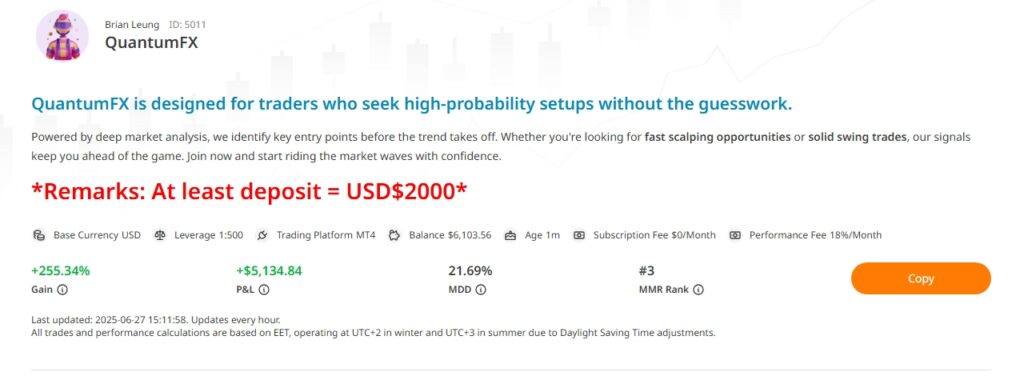
1. QuantumFX (Brian Leung)
- Strategy: Identifies high-probability setups for both quick scalping and longer swing trades by analyzing market trends before they take off.
- Performance Fee: 18%/Month.
- Max Drawdown (MDD): 20.14%.
- All-Time Gain: +270.44%.
- Minimum Deposit: USD$2,000.
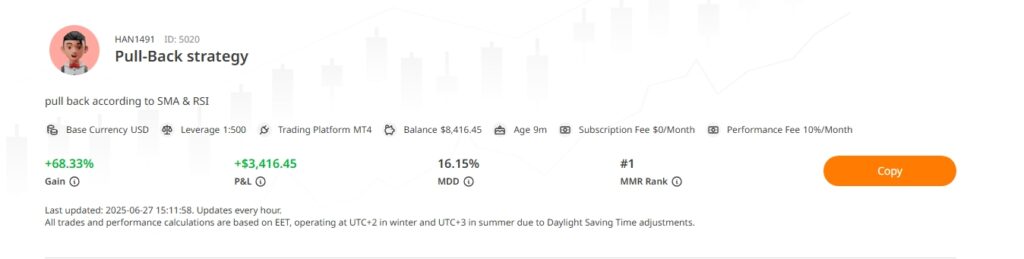
2. Pull-Back Strategy (HAN1491)
- Strategy: A technical approach using Simple Moving Averages (SMA) and the Relative Strength Index (RSI) to execute pull-back trades.
- Performance Fee: 10%/Month.
- Max Drawdown (MDD): 16.15%.
- All-Time Gain: +68.33%.
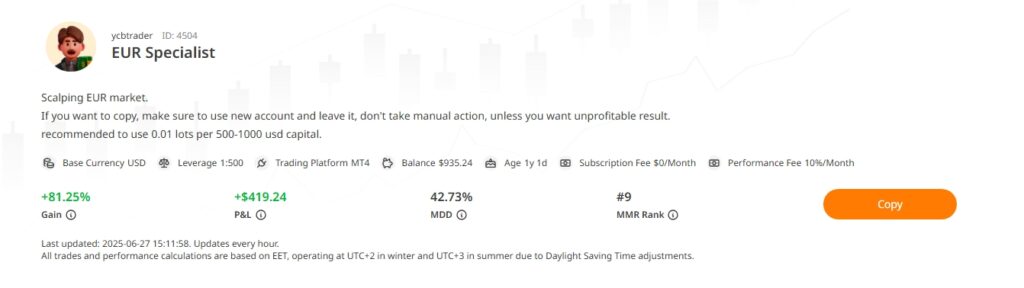
3. EUR Specialist (ycbtrader)
- Strategy: Highly specialized in scalping the EUR market. Recommends using 0.01 lots for every $500-$1000 in capital.
- Performance Fee: 10%/Month.
- Max Drawdown (MDD): 42.73%.
- All-Time Gain: +81.25%.
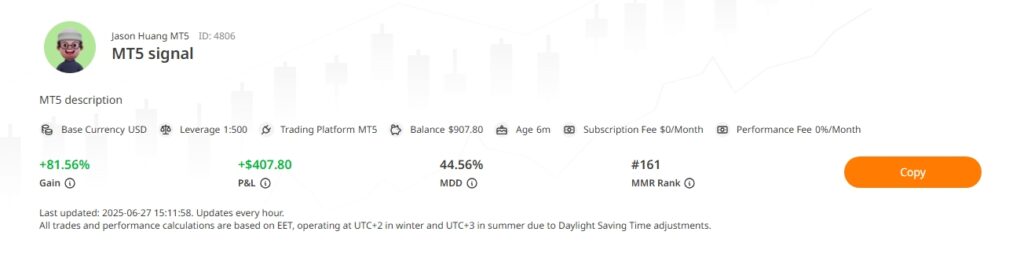
4. Jason Huang (010)
- Strategy: An MT5-based signal with a high-risk, high-reward profile, as indicated by its metrics.
- Performance Fee: 0%/Month.
- Max Drawdown (MDD): 44.56%.
- All-Time Gain: +81.56%.
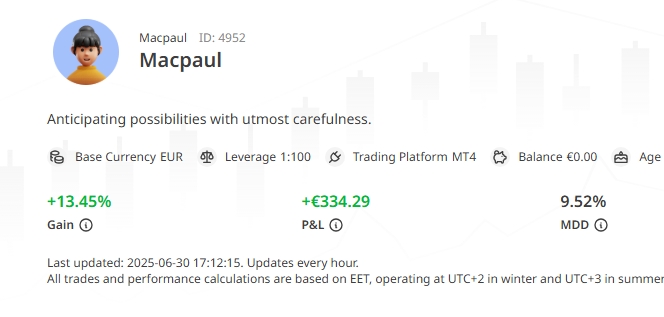
5. Macpaul
- Strategy: Focused on “anticipating possibilities with utmost carefulness,” suggesting a conservative, risk-managed approach.
- Performance Fee: 10%/Month.
- Max Drawdown (MDD): 9.52%.
- All-Time Gain: +13.45%.
Table 1: Comparative Performance Matrix of 5 Signal Providers
| Metric | QuantumFX (Brian Leung) | Pull-Back strategy (HAN1491) | EUR Specialist (ycbtrader) | Jason Huang (010) | Macpaul |
| All-Time Gain % | +270.44% | +68.33% | +81.25% | +81.56% | +13.45% |
| This Month’s Gain % | +32.03% | +0.85% | +3.57% | +227.48% | 0.00% |
| Max. Drawdown (MDD) % | 20.14% | 16.15% | 42.73% | 44.56% | 9.52% |
| Winning Rate % | 79.81% | 69.09% | 66.30% | 26.58% | 74.34% |
| Performance Fee | 18% / Month | 10% / Month | 10% / Month | 0% / Month | 10% / Month |
| MMR Rank | #3 | #1 | #9 | #160 | #8 |
| Account Age | 1 month | 9 months | 1 year, 4 days | 6 months | 11 months |
| Most Traded Pairs | USDJPY, GBPJPY | USDJPY, AUDUSD | EURUSD (97.58%) | EURUSD, USDJPY | Diverse (“OTHER” 52.2%) |
Note: Data as of June 30, 2025. Past performance is not indicative of future results.
The $2,000 Question: What Would a Real Investment in Copying Top 5 Free Forex Signal Actually Return?
Abstract percentages are useful, but a tangible cost-benefit analysis provides true clarity. By modeling a hypothetical $2,000 investment based on the most recent month’s performance, we can translate these metrics into real dollars and cents. This exercise answers the most fundamental question every potential copier has: “After all is said and done, how much money could I have made?”
The analysis below calculates the gross profit, deducts the performance fee, and reveals the net profit for each trader. It also highlights crucial context, such as minimum deposit requirements and the inherent risks associated with certain strategies. This table serves as a powerful illustration of how different trading styles can produce wildly different outcomes for your capital.
Table 2: Projected Monthly Returns on a $2,000 Investment
| Trader Name | Initial Investment | Monthly Gain % | Gross Profit ($) | Perf. Fee (%) | Fee Deduction ($) | Net Profit ($) | Key Considerations |
| QuantumFX | $2,000 | +32.03% | $640.60 | 18% | $115.31 | $525.29 | Meets the $2,000 minimum deposit requirement. |
| Pull-Back strategy | $2,000 | +0.85% | $17.00 | 10% | $1.70 | $15.30 | Top MMR Rank (#1) but very low recent performance. |
| EUR Specialist | $2,000 | +3.57% | $71.40 | 10% | $7.14 | $64.26 | High specialization in EUR market; significant MDD (42.73%). |
| Jason Huang | $2,000 | +227.48% | $4,549.60 | 0% | $0.00 | $4,549.60 | Extreme high-risk, high-reward. Very high MDD (44.56%) and low win rate (26.58%). |
| Macpaul | $2,000 | 0.00% | $0.00 | 10% | $0.00 | $0.00 | Most conservative with lowest MDD (9.52%). Base currency is EUR, introducing currency risk. |
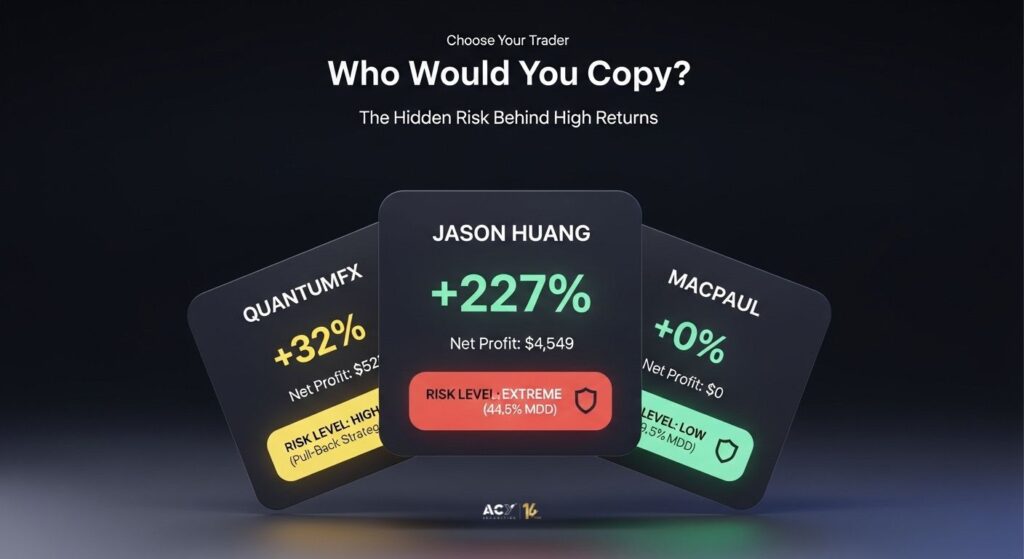
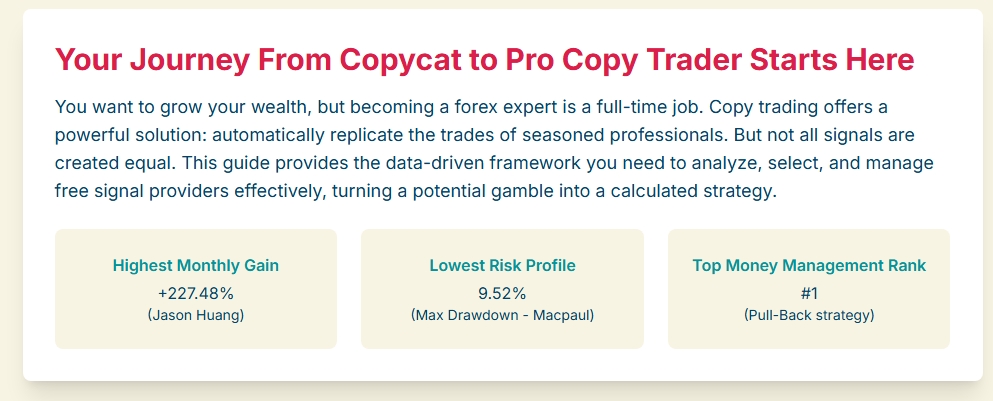
This analysis immediately reveals a critical insight. The trader with the most spectacular monthly return, Jason Huang, also carries the highest risk, as indicated by his enormous Maximum Drawdown (MDD) and low win rate. Conversely, the most conservative trader, Macpaul, preserved capital but generated no profit this month. This highlights the fundamental trade-off in investing: risk and reward are inextricably linked. The “best” trader is not simply the one with the highest gain; it is the one whose risk profile most closely aligns with your own.
How to Find Your Own Forex Signals on TradingCup
The goal is not just to follow a list, but to learn how to fish. The TradingCup platform offers several powerful filters to help beginners find traders that match their specific risk tolerance and goals. Understanding these tools is key to becoming an effective manager of traders. Beyond Manual Search Below Are Filtered Lists From TradingCup
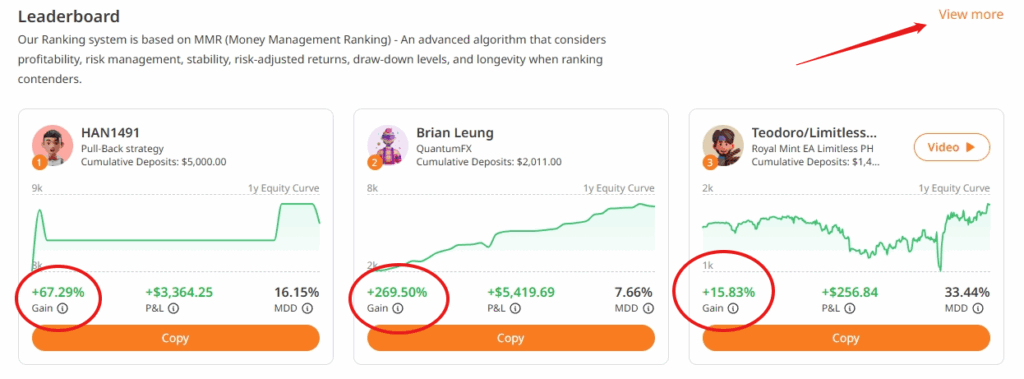
Leaderboard: Based on an MMR (Money Management Ranking) system or similar composite score, ranking traders holistically over their entire history.
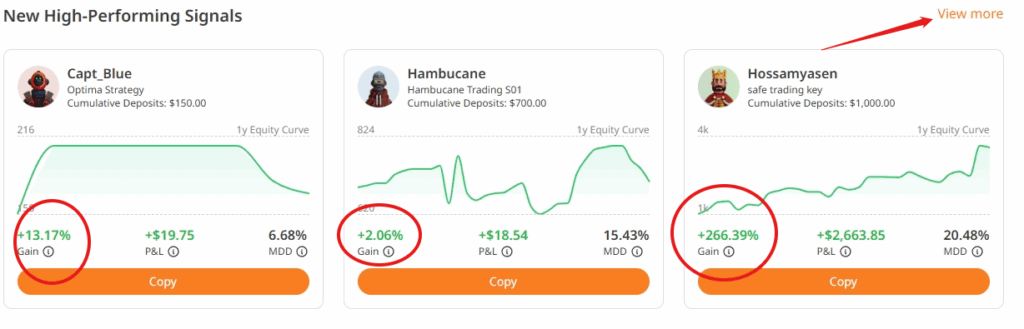
New High-performing Signals: Focuses on newer traders (e.g., < 1 year) showing positive Gain %. Good for finding emerging talent, but requires caution due to shorter track records.
Free Signals: Focuses on traders (e.g., > 1 year) showing positive Gain %. Good for finding Free Signal Providers. A great starting point for beginners to try copy trading without incurring huge costs.
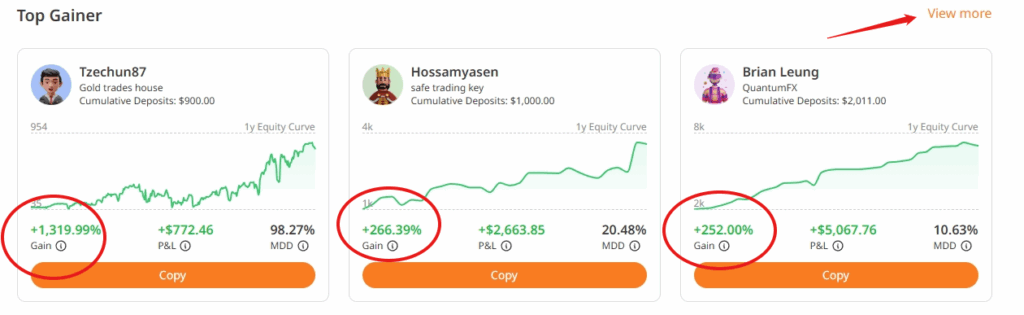
Top Gainer: Purely ranks by Gain % over a period (e.g., 1 year), often filtering for positive gain. Use with caution – high gain can mean high risk. Always check MDD and Sharpe Ratio here. It is tempting to simply sort all traders by the “Top Gainer” filter to see who is making the most money. This is the most direct path to finding traders like Jason Huang. While potentially lucrative, using this filter in isolation is the single most dangerous approach for a beginner. A high gain figure tells you nothing about the risk taken to achieve it.
A professional approach dictates that if you use the “Top Gainer” filter, you must immediately cross-reference the results with other critical risk metrics. The key questions to ask are:
What is the Profit Factor? This is the gross profits divided by the gross losses. A number greater than 1 means the strategy is profitable, but a higher number (e.g., >1.5) indicates more robust profitability.
What is the Maximum Drawdown (MDD)? A gain of 200% is less appealing when paired with an MDD of 50%, which means at one point, the strategy lost half of its value.
What is the Sharpe Ratio? This metric measures risk-adjusted return. A higher Sharpe Ratio (ideally >1.5) indicates the trader is generating better returns for the level of risk they are taking on.
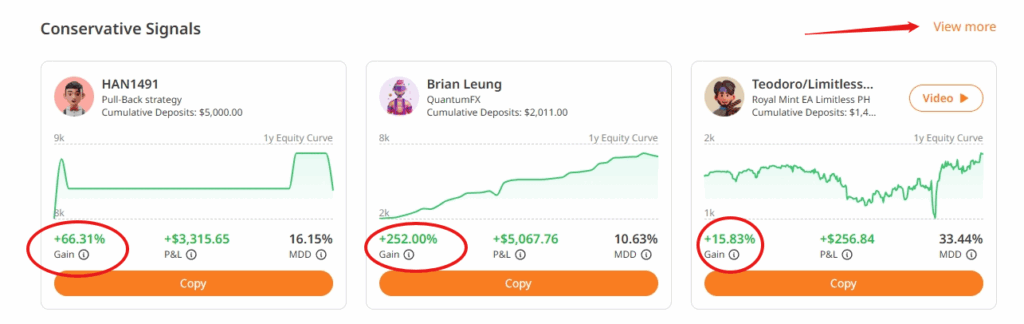
Conservative Signals: Filters for low risk, typically using a Maximum Drawdown threshold (e.g., <= 10% over 1 year) and often ranked by MMR within that subset. Ideal for risk-averse investors.
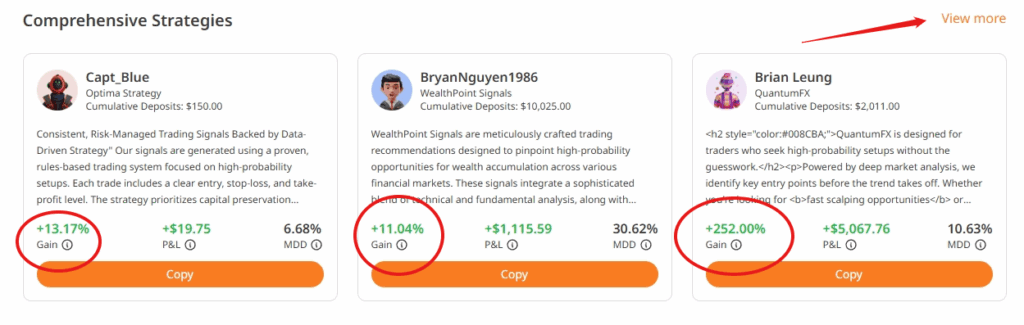
Comprehensive Strategies: Attempts to filter based on the quality and detail of the trader’s strategy description (looking for non-generic, non-volatile approaches like Martingale) combined with positive Gain %.
The Zuckerberg Method: How to Think About Signal Selection Like a Tech CEO

“Move Fast and Break Things”? Not With Your Money. Adopting a Data-First Framework.
In the early days of Facebook, Mark Zuckerberg’s famous motto was “move fast and break things.” This philosophy encouraged rapid innovation and risk-taking, prioritizing speed over perfection. While this approach built a global empire, it is a disastrous strategy to apply to your personal investment capital. A more relevant lesson comes from Zuckerberg’s mature leadership style, which is defined by a relentless, almost obsessive, focus on using data to drive every major decision.
Facebook (now Meta) doesn’t guess what users want; it analyzes colossal datasets of user behavior, likes, shares, clicks, time spent on content to understand patterns and preferences with profound accuracy. The lesson for the aspiring copy trader is to emulate this data-driven mindset. Your goal is not to “move fast and break” your account by chasing hot trends. It is to move methodically, using the rich data available on a trader’s performance to make a calculated, strategic decision. Signal selection should be treated like a critical business analysis, not a spin of the roulette wheel.
This approach goes deeper than just looking at a single number. Zuckerberg’s teams don’t make decisions based on one viral post; they analyze trends over time to predict future behavior. Similarly, a professional copy trader doesn’t get mesmerized by one month of high returns. They analyze the entire performance history, the equity curve, the consistency of returns, the depth of drawdowns, and the risk-adjusted metrics to understand the trader’s pattern of behavior. You are using historical data to build a probabilistic forecast of how that trader will likely perform, and manage risk, in the future.
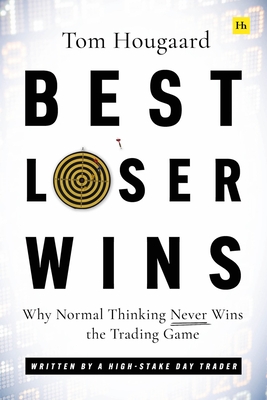
Becoming the Best Loser: 10 Lessons on Professional Mindset from Tom Hougaard
Why Your Brain is Your Biggest Enemy in Trading
You can perform the most sophisticated data analysis, select a trader with a flawless track record, and build a perfectly diversified portfolio, yet still fail. The reason, according to high-stakes trader and author Tom Hougaard, is that the greatest obstacle to trading success is not the market; it is your own mind. In his seminal book, Best Loser Wins, Hougaard argues that successful trading is perhaps 80% psychology and only 20% strategy. He famously states, “People don’t fail because they don’t know enough about technical analysis. They fail because they don’t understand what the markets are doing to their minds”.
This is a profound insight for a copy trader. Even though you are not the one clicking the “buy” or “sell” button, you are still psychologically exposed to the market’s every move. When your account balance dips, your brain will flood with the same corrosive emotions that plague manual traders: fear, greed, doubt, and hope. These emotions can cause you to make catastrophic errors, such as manually closing a copied trade during a temporary drawdown, only to watch it reverse and become profitable, or abandoning a solid, long-term trader after one bad month.
The lessons from Hougaard are therefore not a manual for you to become a high-stakes trader yourself. They are a crucial lens through which you can understand the mindset of the professional you are copying. By internalizing these principles, you can build the psychological fortitude required to stick with your chosen strategy, trust the process, and avoid becoming your own worst enemy.
The 10 Commandments of a Pro Trader’s Mindset (And How They Apply to You)

Here are ten core principles from Best Loser Wins, translated into actionable wisdom for every copy trader.
- Losing is Inevitable; Learn to Lose Well. The market is a game of probabilities, not certainties. Every single trading strategy will have losing trades and periods of drawdown. The best traders are not those who never lose; they are those who lose effectively, cutting losses quickly and without emotional attachment. For a copier, this means accepting drawdowns as a normal and expected part of the process. Don’t panic at the first sign of red.
- Detach Your Ego from the Outcome. A losing trade is a data point, not a reflection of your intelligence or worth. When a copied trade loses money, it is not a personal failure. For a copier, this means maintaining objectivity. Avoid blaming the trader for every dip and, just as importantly, avoid blaming yourself for choosing them. Stick to your data-driven selection criteria.
- Risk Management is Your Religion. Before a professional trader ever thinks about profit, they think about risk. Protecting capital is the number one priority, because without capital, you cannot trade. For a copier, this means your most important decisions are made before you start copying. It’s the act of using filters to find traders with acceptable MDD, diversifying your capital across multiple signals, and never investing more than you can afford to lose.
- Embrace Failure as a Teacher. Every loss contains a lesson. It reveals a weakness in a strategy or a change in market conditions. For a copier, a losing period with a trader is a valuable learning opportunity. It teaches you how that trader’s strategy behaves under pressure and in adverse markets. This knowledge is critical for deciding whether to stick with them long-term.
- Adaptability is Survival. No strategy works forever because the market is constantly evolving. A rigid mindset is a fatal flaw. For a copier, this is the antidote to the “set and forget” mentality. You must regularly review your chosen traders to ensure their strategy remains effective and aligned with your goals.
- Hope is a Four-Letter Word. Hougaard identifies hope as one of the most destructive emotions in trading. It is the reason people hold onto losing positions, praying for a turnaround, long after their strategy has been invalidated. For a copier, this is a critical warning. Do not stick with a consistently underperforming trader simply because you hope they will recapture their past glory. Trust the current data, not hope.
- Your Mind’s Goal is to Protect You from Pain, Not Make You Money. The human brain is hardwired for survival. When faced with the “pain” of a financial loss, its primary objective is to make the pain stop. This often leads to irrational decisions, like closing a position at the point of maximum loss. For a copier, this means recognizing that your gut feeling during a drawdown is likely to be wrong. You must learn to trust the data-driven strategy of the professional over your own emotional instincts.
- Discipline is the Bridge Between Goals and Accomplishment. Success in any field comes from the consistent application of a sound plan. For a copier, your “plan” is the entire framework you build: your rules for selecting traders, your diversification strategy, your monitoring schedule, and your criteria for when to stop copying someone. Discipline is the act of sticking to that plan, especially when it’s emotionally difficult.
- Think in Probabilities, Not Certainties. The market is fundamentally unpredictable. Even the best trader in the world is not dealing in certainties; they are operating with a probabilistic edge. They know their strategy will win, for example, 65% of the time over the long run. For a copier, this understanding is liberating. It removes the pressure of expecting every trade to be a winner and helps you focus on the long-term performance of the strategy.
- The Trend is Your Friend (Until it Bends). Markets have inertia. An asset that is trending up is more likely to continue trending up than to reverse. For a copier, this principle helps you understand a trader’s behavior. It explains why they might hold a position through minor pullbacks, as they are playing for the continuation of the larger, more powerful trend.
Why Putting All Your Eggs in One Basket is a Rookie Mistake: The Power of Five
Once you have mastered the art of selecting a single trader, the next level of professional copy trading involves diversification. Relying on a single signal provider, no matter how skilled, exposes you to significant idiosyncratic risk. That trader could fall ill, change their strategy, suffer a psychological breakdown, or simply encounter a market environment that is hostile to their specific approach.
A more resilient approach, as suggested by an article on the TradingCup platform, is to diversify your capital across multiple traders, for example, by copying up to five different providers. The rationale is the same as for a traditional stock portfolio. By combining traders with different styles, you can build a more robust and stable equity curve. For example, you could construct a portfolio that includes:
- One or two conservative traders (low MDD) to act as the stable core.
- Two moderate traders (good MMR, solid long-term gains) as the primary growth engines.
- One specialist trader (e.g., one who only trades Gold or a specific currency pair) to add a non-correlated source of returns.
This diversification smooths out returns and reduces the impact of any single trader having a bad month. It transforms your copy trading from a single bet into a managed portfolio.
Are You Watching Too Much or Not Enough? A Practical Guide to Monitoring Your Portfolio
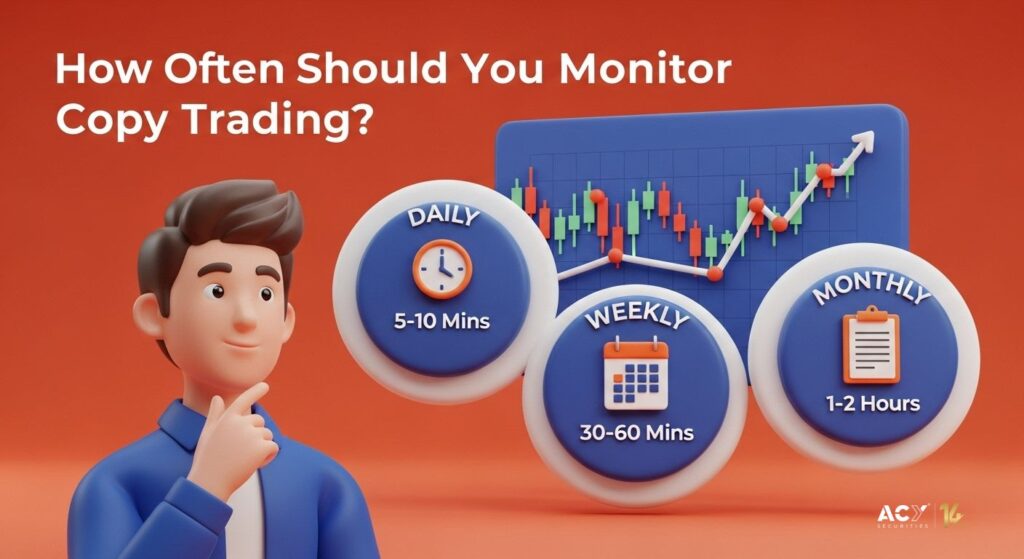
A common question from beginners is, “How often should I check my account?” The answer lies in finding a balance between informed oversight and obsessive monitoring. Watching every tick of the market is counterproductive; it invites emotional decision-making and anxiety. Conversely, a “set and forget” approach is negligent. A professional monitoring schedule might look like this:
- Daily (5 minutes): A quick check to ensure there are no major platform issues or catastrophic events. Look at the overall account balance, not individual trades. The goal is situational awareness, not analysis.
- Weekly (30 minutes): A more in-depth review. Check the performance of each individual trader for the week. Has their risk profile changed? Have they posted any updates or comments about their strategy? This is your primary check-in to ensure things are on track.
- Monthly (1 hour): A full strategic reassessment. Review each trader’s monthly performance against their long-term history and against your other traders. Is their strategy still aligned with your goals? Is it time to reallocate capital, or perhaps switch out an underperforming trader for a new one?
This structured approach, as outlined in guides on the subject , keeps you engaged and in control without succumbing to the emotional rollercoaster of minute-by-minute price movements
Don’t Copy Trade in a Vacuum: How to Leverage Expert Analysis for Free

One of the most powerful yet underutilized risk management tools is the educational ecosystem provided by your broker. Platforms like ACY Securities, which powers TradingCup, offer a wealth of free resources, including market analysis videos, webinars with senior analysts, and community channels on platforms like Discord and Telegram.
This provides a crucial “second opinion” and transforms you from a passive copier into an active, informed investor. Imagine this scenario: you are copying a trader who has taken a large position on the Japanese Yen. The trade immediately goes into a drawdown, and you begin to panic. Your emotional brain tells you to cut your losses and stop copying.
However, before acting, you join a free weekly market webinar hosted by an ACY analyst. In the webinar, the analyst provides a detailed breakdown of the Bank of Japan’s latest policy statement and explains the fundamental reasons why they anticipate Yen weakness in the coming weeks. This piece of expert, external analysis validates the thesis behind your copied trader’s position. It provides you with the context and confidence to stick with the trade, overriding your fear-based impulse. By leveraging these resources, you create a supportive framework that mitigates the fear and isolation that often lead to poor decisions.
Your Education Doesn’t End Here: Essential Next Reads
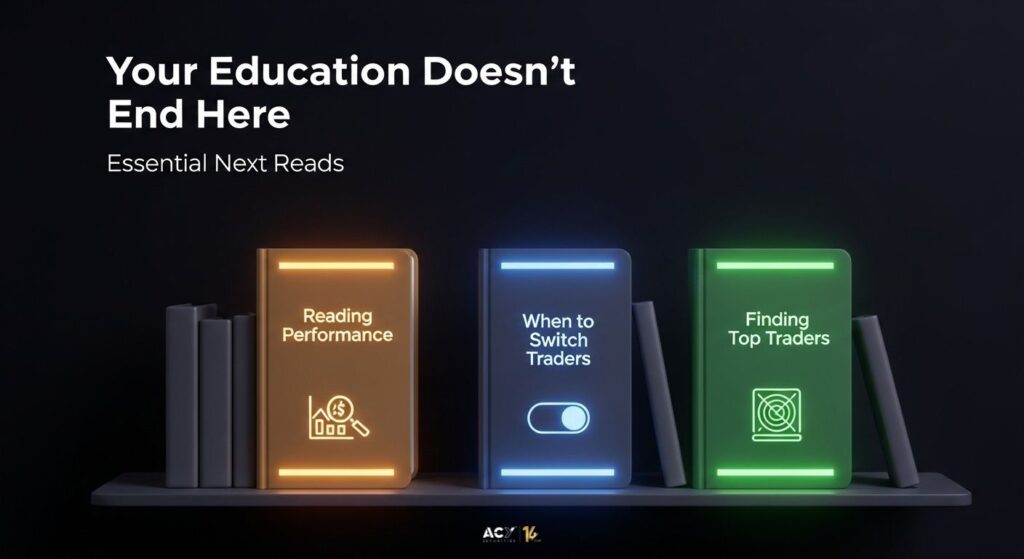
Becoming a professional-level copy trader is a journey of continuous learning. The analysis in this guide has provided a robust foundation, but to deepen your expertise, further reading is essential. The following resources provide critical insights into the nuances of trader selection and management.
- Who to Copy Trade: How to Read a Trader’s Performance Think you’ve found a star trader? Before you commit your capital, you need to learn how to look under the hood. A high profit number can be deceiving. This guide teaches you to read the full spectrum of performance metrics, from drawdown and Sharpe ratio to expectancy and profit factor, like a professional analyst. It will empower you to move beyond simple returns and truly understand a trader’s skill, risk profile, and long-term consistency.
- When to Switch Traders in Copy Trading Loyalty is a virtue in life, but in trading, blind loyalty can be a liability. Every great trader will experience periods of underperformance. The critical challenge is distinguishing between a temporary, acceptable drawdown and a sign that a trader’s strategy is fundamentally broken or no longer suited to the market. This essential read provides a clear, data-driven framework for making that difficult decision, helping you know when to hold ’em and when to fold ’em.
- How to Find Top Traders to Copy Trade A copy trading platform is a sea of potential, but finding the true gems requires a systematic approach, not just luck. Simply picking from the top of the default leaderboard is a novice move. This article dives deep into advanced search, filtering, and discovery techniques. It shows you how to combine different metrics and strategies to systematically uncover the top traders that align perfectly with your specific financial goals and personal risk appetite.
Conclusion: Your Path from Copycat to Pro-Level Copy Trader
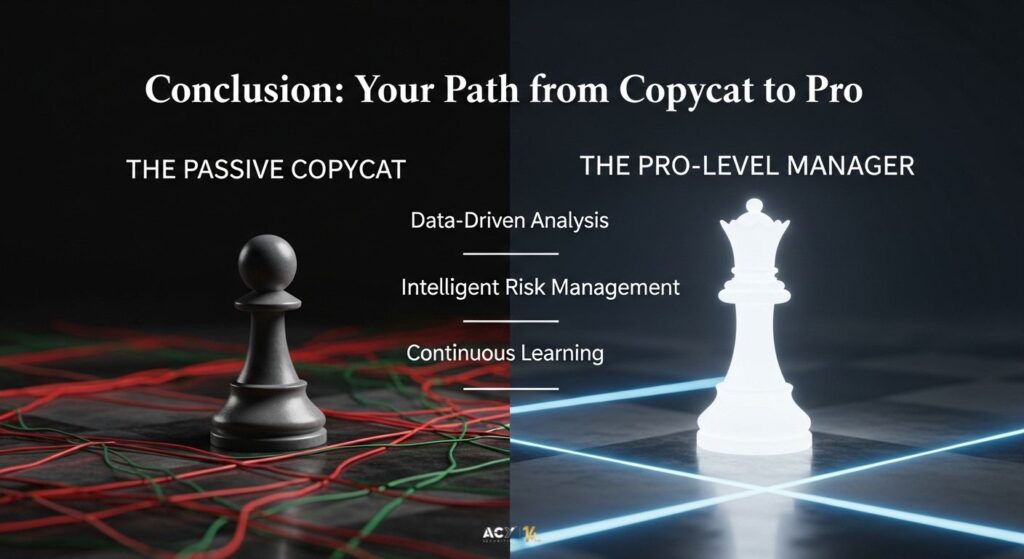
The journey into forex copy trading begins with the allure of a simple shortcut but quickly reveals itself to be a sophisticated strategic endeavor. The path from being a simple “copycat” to a pro-level copy trader is not about finding a magic bullet, but about adopting a professional framework.
This framework rests on four pillars. First is diligent, data-driven analysis, using the tools at your disposal to look past the marketing and understand the true risk and reward of any signal provider. Second is a disciplined psychological mindset, learning to manage your own emotions of fear and greed so they do not sabotage the strategy you are copying. Third is intelligent risk management, primarily through the power of diversification. And fourth is a commitment to continuous learning, always seeking to refine your process and deepen your understanding of the markets.
By embracing this comprehensive approach, you transform copy trading from a gamble into a calculated investment strategy. You move from being a passive follower to an active manager of your own portfolio of experts. Your journey can now begin not with a blind leap of faith, but with a smart, confident, and strategic first step.
Frequently Asked Questions (FAQ)
Q1: Is forex copy trading a scam?
While the forex market does have fraudulent actors who promise guaranteed returns, copy trading on a regulated platform is not inherently a scam. Legitimate platforms like TradingCup provide transparent access to a trader’s full performance history, including critical risk metrics like Maximum Drawdown. The key is to use these tools to perform thorough due diligence. A scam often involves hiding information and promising unrealistic outcomes; a legitimate service provides the data for you to make an informed decision. The risk comes from blindly trusting marketing claims instead of analyzing the provided data.
Q2: Can you lose more than you invest in copy trading?
For most retail clients using reputable CFD brokers in major jurisdictions, the answer is no. These brokers are typically required to provide Negative Balance Protection. This means that even in a highly volatile, fast-moving market event, your account cannot go into a negative balance. The maximum you can lose is the total amount of capital you have deposited in your account. However, it is absolutely possible, and a very real risk, to lose your entire investment.
Q3: Is copy trading considered gambling?
The distinction lies in the approach. Blindly picking a trader based on a flashy, short-term profit number without any further research is functionally equivalent to gambling. You are betting on luck. However, using a disciplined, data-driven framework to analyze and select traders based on long-term, risk-adjusted metrics (like MMR, Sharpe Ratio, and MDD), and then diversifying across several of them, is a strategic investment approach. The former is a game of chance; the latter is a game of skill and analysis.
Q4: How much money do I need to start copy trading?
The minimum amount varies significantly depending on the platform and the specific signal provider. Some platforms may allow you to start with as little as a few hundred dollars. However, some individual traders set their own minimums to ensure copiers have enough capital to properly replicate their strategy without taking on excessive risk. For example, the trader QuantumFX requires a minimum deposit of $2,000 to copy his signals, whereas ycbtrader recommends a capital base of $500-$1,000.
Q5: Do I have to pay taxes on copy trading profits?
Yes. In virtually all jurisdictions, profits generated from trading activities, including copy trading, are considered taxable income. The specific tax rate and how the income is classified (e.g., as capital gains or business income) will depend entirely on the tax laws of your country of residence. It is essential to keep detailed records of your trading activity and to consult with a qualified local tax professional to ensure you are meeting all of your tax obligations.
(Disclaimer: This article is for informational and educational purposes only. It should not be considered financial advice. Always conduct your own research and consult with a qualified financial advisor before making any investment decisions.
For more detailed insights on developing daily trading routines, risk management, and effective position sizing strategies, explore additional articles on Trading Cup. Our trading experts at ACY and FinLogix are also great resources to guide your journey towards trading excellence.

Discover Our Best Trading Signals
At Tradingcup, you can browse through a selection of signals and review past performance before you decide to copy.
Become A Signal Provider
Share your expertise and become a signal provider so other traders can copy your trades.
Stay tuned to our blog for more trader spotlights and leaderboard updates.
Trading involves risks.
Visit the Tradingcup blog through the link below for more updates: https://www.tradingcup.com/learn
Related Copy Trading blogs:
- Understanding Market Liquidations: Liquidity Sweeps and Runs Explained
- 7 Essential Daily Habits of Successful Traders to Outperform Their Peers
- 10 Strategies You Can Copy off Our Best Copy Traders
- 5 Strategies Every Trader Can Master To Trade Better In A Trading Contest
- 2025 Copy Trading Scams Exposed: How to Spot Fraud
- A Swing Trading Strategy with an 83 Percent Win Rate and Low Drawdowns
- Forex Martingale Strategies Explained, The Good, The Bad and The Ugly
- Pyramiding Trading Tutorial – Pros & Cons & How to Use It