
Copy Trading Risk Management: How to Reduce Losses And Protect Your Capital

TradingCup
MAR 14 2025
Last Updated: March 14, 2025
This article is reviewed annually to reflect the latest market regulations and trends.
Risk Management in Copy Trading
“In investing, what is comfortable is rarely profitable.” – Robert Arnott
TLDR Summary: Copy trading allows you to mirror successful traders, but it comes with significant risks. This guide outlines strategic risk management techniques, including stop-loss orders, diversification, and psychological discipline, to help protect your capital and enhance your trading outcomes.
Introduction: The Appeal and Risks of Copy Trading
Copy trading has transformed how individuals engage with financial markets. With platforms like those offered by tradingcup.com, you can mirror the trades of experienced investors with just a few clicks.
This accessibility has fueled its surge in popularity, especially among beginners seeking to leverage expert strategies without mastering the intricacies of trading themselves. For experienced traders, it offers a way to diversify their approaches efficiently.
The appeal is undeniable: copy trading simplifies entry into the markets, reduces the learning curve, and promises potential profits by following proven performers. Yet, beneath this convenience lies a critical caveat: significant risks, often amplified by emotional and psychological factors.
The ease of copying trades can breed complacency, overconfidence, or impulsive decisions, leading to substantial losses if not managed properly.
What is copy trading, exactly? It’s a system where you replicate the trades of selected investors in real time. While it offers advantages, such as time-saving and access to expertise, the hidden risks like those tied to leverage or market volatility cannot be ignored. This is where risk management becomes non-negotiable. It’s the backbone of protecting your capital and ensuring long-term success. In this article, we’ll explore how to manage risk while copy trading, helping you navigate its challenges with a strategic, informed approach.
Understanding Risk in Copy Trading
To succeed in copy trading, you must first grasp the risks involved. These can be systematic, stemming from market dynamics, or personal, tied to the traders you copy. Here are the key types of risks:
- Market Risk: This is the risk of losses due to unpredictable price movements. Economic shifts, geopolitical events, or sudden market sentiment changes can all trigger volatility. For example, copying a forex trader during a major central bank announcement could expose you to sharp price swings.
- Liquidity Risk: This occurs when an asset cannot be traded quickly enough to avoid a loss. If a copied trader focuses on illiquid markets—like small-cap stocks you might struggle to exit positions at favorable prices, increasing your losses.
- Systematic Risk: Broader than market risk, this affects entire markets or sectors due to factors like interest rate hikes or recessions. It’s unavoidable and impacts all traders, regardless of strategy.
- Counterparty Risk: This is the risk that the platform or copied trader fails to fulfill their obligations. While rare with reputable platforms, it’s a consideration, especially with lesser-known providers.
- Operational Risk: Losses here stem from technical failures, human errors, or external events like a platform outage during a critical trading window.
Beyond these, assessing the risk profile of the traders you copy is crucial. Their risk tolerance (how much variability they can stomach) and risk appetite (how much risk they’re willing to take for returns) shape their strategies and your outcomes. Platforms often provide risk tolerance questionnaires or categorisation tools to evaluate this. A trader with a high-risk appetite might thrive in volatile conditions but could spell trouble if your tolerance is lower. Understanding these profiles helps align your choices with your goals.
Strategic Risk Categories in Copy Trading
Copy trading isn’t just about numbers, it’s about human behavior. Emotional and psychological factors can derail even the best strategies. Here’s how they manifest in four key categories:

Optimism and Confidence
Excessive optimism, driven by FOMO (Fear of Missing Out) or greed, can lead to reckless decisions. You might see a trader racking up wins and pour too much capital into copying them, ignoring their risk levels. Overconfidence can blind you to the reality that past success doesn’t guarantee future gains. The key risks of copy trading to consider and avoid here include chasing short-term profits without due diligence.

Caution and Risk Awareness
Conversely, over-caution can paralyse you. Loss aversion, fearing losses more than valuing gains might stop you from copying a solid trader with manageable risks. While protecting capital is vital, excessive caution can mean missing out on opportunities. A balanced approach weighs risks against potential rewards realistically.

Uncertainty and Indecision
Information overload is common on copy trading platforms, with endless data on traders’ performance. Add groupthink copying popular traders without analysis, and you risk analysis paralysis. This indecision can delay action, causing you to miss optimal entry points or cling to underperforming strategies.

Emotional Strain and Stress
Market volatility tests your emotional resilience. Anxiety from losses or impatience during drawdowns can push you to make impulsive moves like ditching a trader mid-strategy or chasing riskier ones to recover. Managing this stress is essential for consistent decision-making.
Risk Management Strategies for Copy Trading
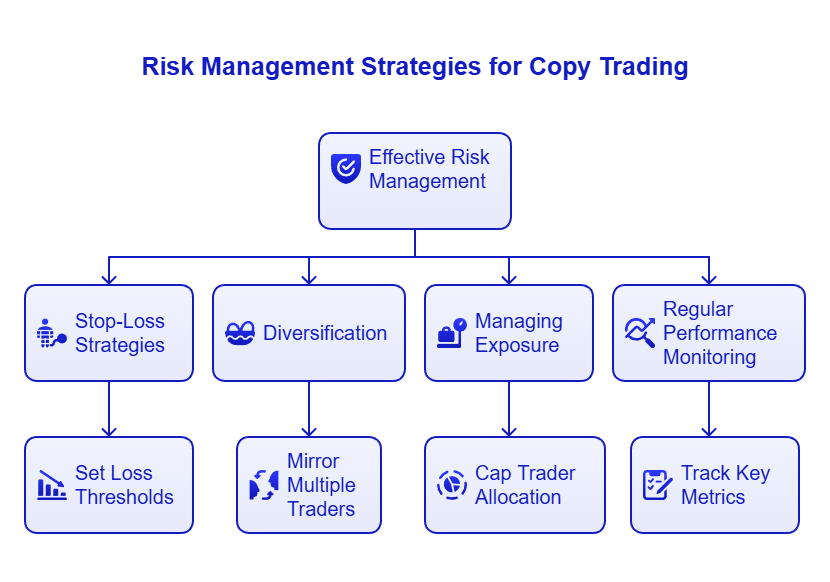
Effective risk management turns copy trading from a gamble into a calculated endeavor. Here’s how to reduce risk in copy trading with actionable strategies:
Stop-Loss Strategies
Stop-loss orders are your first line of defense. They automatically close a position at a set loss threshold, capping your downside. For example, setting a stop-loss at 10% below entry limits your loss to that amount. Pair this with a fixed risk per trade, say, 1-2% of your capital, to keep losses manageable. Platforms often let you apply stop-losses to individual trades or your entire copied portfolio.
Implementing effective stop-loss strategies is crucial for minimizing potential losses. For insights on identifying trades with favorable risk-reward ratios, consider reading our guide on spotting low-risk, high-reward trading opportunities.
Using a copy trading multiplier can impact your risk exposure, so it’s important to understand how it works
Diversification
Copying one trader is like putting all your eggs in one basket. Diversify by mirroring multiple traders with varied strategies (e.g., forex, stocks) and risk profiles. This spreads risk, so a single trader’s losses don’t sink your portfolio. Aim for a mix that balances high and low-risk approaches.
Managing Exposure
Limit how much capital you allocate per trader to avoid overexposure. A good rule: cap each trader at 10-20% of your portfolio. This way, even a major loss from one doesn’t devastate your capital.
Regular Performance Monitoring
Track your copied traders’ performance consistently. Focus on metrics like:
- Drawdown: The peak-to-trough decline in value. High drawdowns signal risk.
- Sharpe Ratio: Return per unit of risk. Higher is better.
- Sortino Ratio: Return per unit of downside risk, refining risk assessment.
Review these monthly to spot trends or red flags, adjusting your allocations as needed.
Advanced Techniques
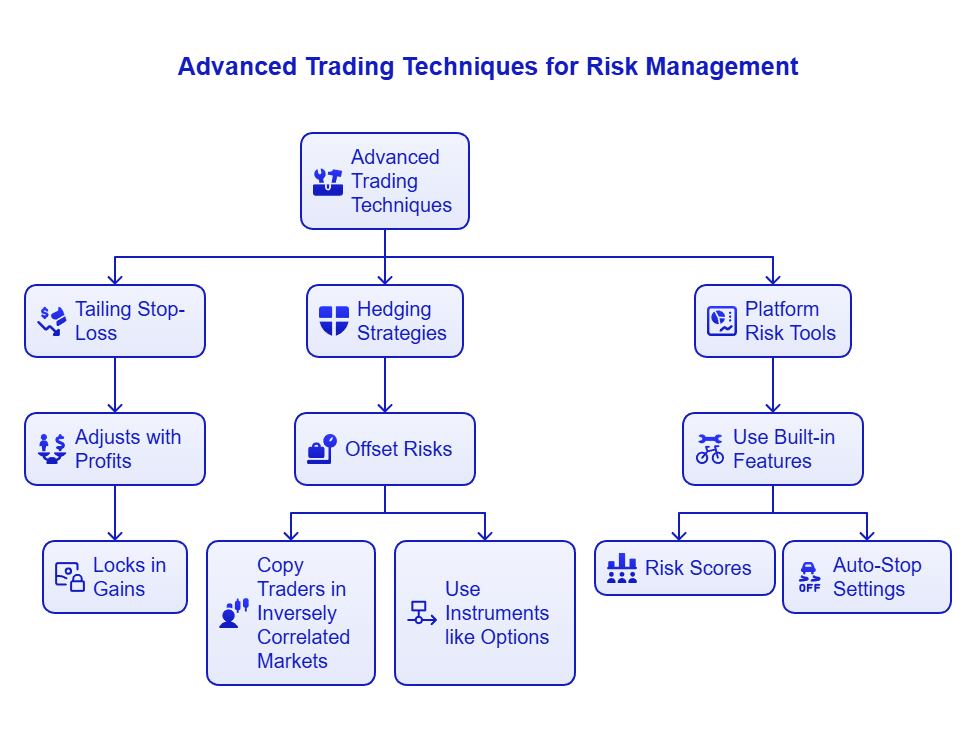
For seasoned traders, advanced tools add protection:
- Trailing Stop-Loss: Adjusts upward with profits, locking in gains while capping losses.
- Hedging Strategies: Offset risks by copying traders in inversely correlated markets or using instruments like options.
- Platform Risk Tools: Use built-in features like risk scores or auto-stop settings.
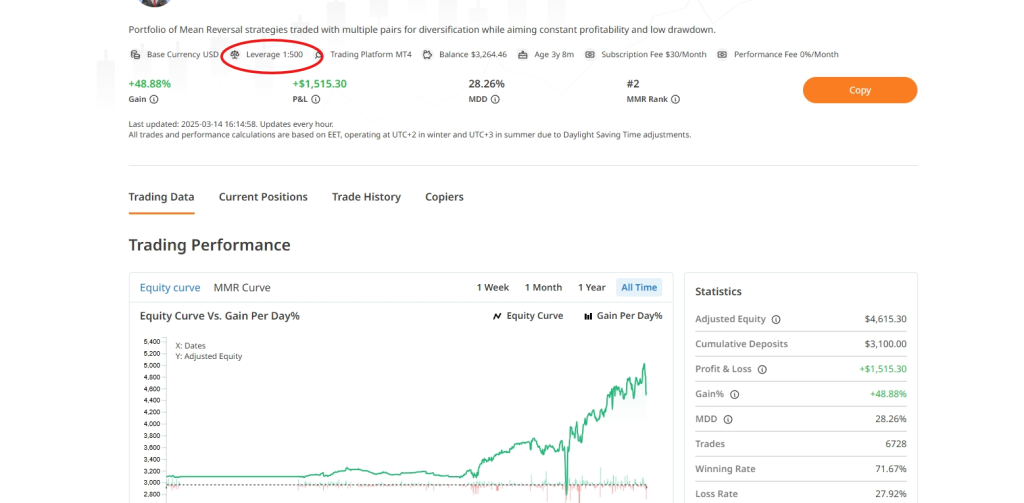
The hidden risks of leverage in copy trading like amplified losses can also be mitigated with these tools. Always check the leverage levels of traders you copy.
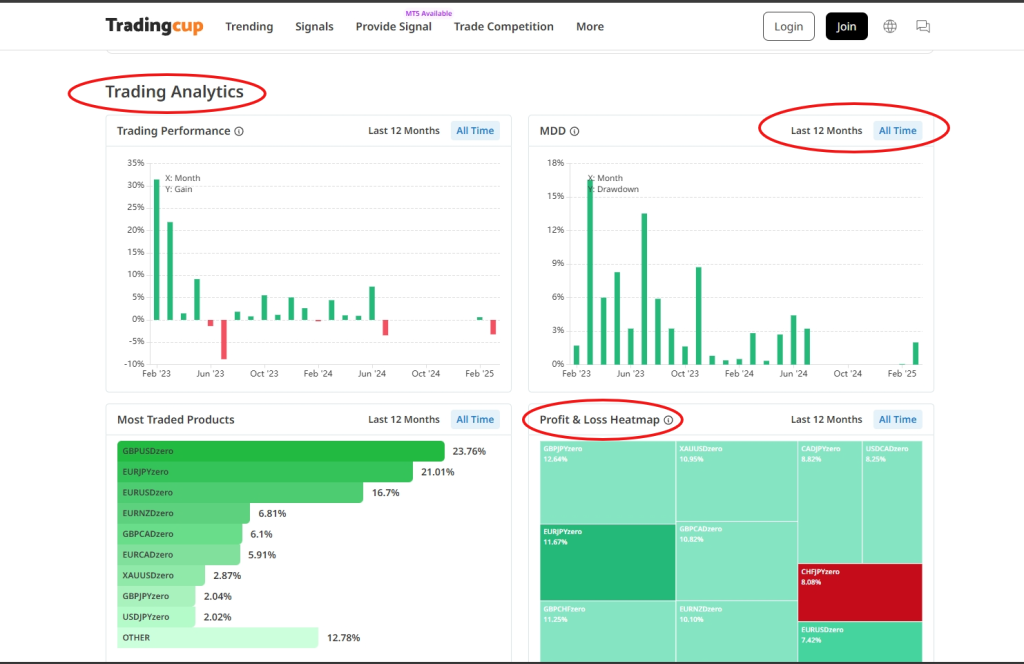
Practical Applications and Tools
Putting these strategies into action requires leveraging platform features. Here’s a step-by-step approach:
- Risk Assessment Tools: Use platform ratings to gauge trader risk. Select those matching your tolerance.
- Demo Accounts: Test strategies risk-free. Copy trader’s strategies in a simulated environment to refine your approach.
- Performance Dashboards: Review profit, loss, and drawdown data weekly. Adjust based on trends.
- Scoring System: Rate traders (1-5) on consistency, risk management, and alignment with your goals. Copy top scorers.
- Risk Profile Evaluation: Complete platform questionnaires to define your tolerance, guiding trader selection.
Psychological Aspects of Copy Trading
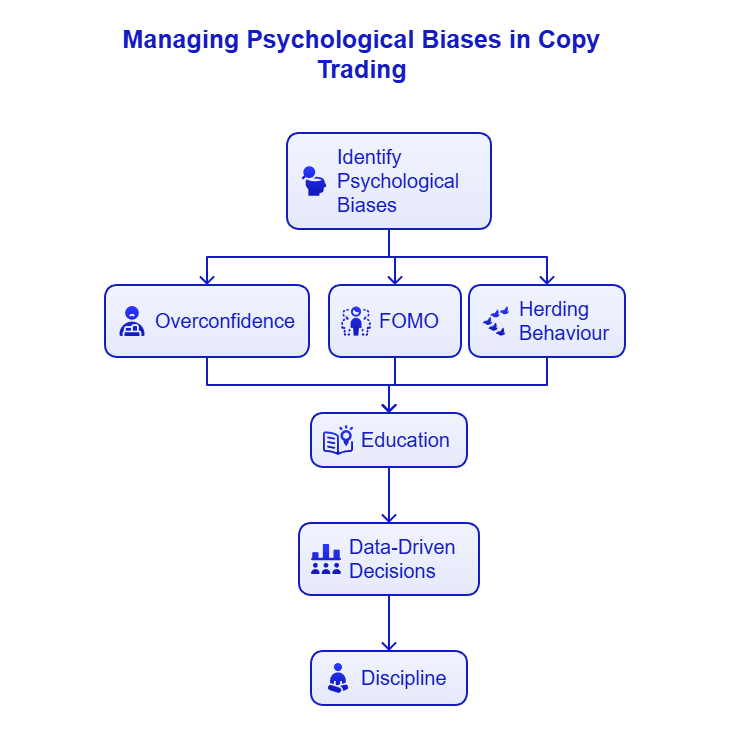
Emotions can sabotage your strategy. Common biases include:
- Overconfidence: Overestimating your trader-picking skills after wins.
- FOMO: Rushing to copy trending traders without research.
- Herding Behaviour: Following the crowd, ignoring data.
Counter these with:
- Education: Learn market basics to boost rational thinking. Visit finlogix.com for resources.
- Data-Driven Decisions: Rely on metrics, not feelings.
- Discipline: Stick to your plan, avoiding knee-jerk reactions.

Conclusion: Mastering Risk for Copy Trading Success
Copy trading blends opportunity with risk. Effective risk management through stop-losses, diversification, exposure limits, monitoring, and advanced tools protects your capital and drives sustainable gains. Understanding emotional and systematic risks ensures informed, repeatable decisions.
Master these techniques, and you’ll turn copy trading into a strategic advantage. The key takeaway? Risk vs reward in trading demands vigilance and balance.
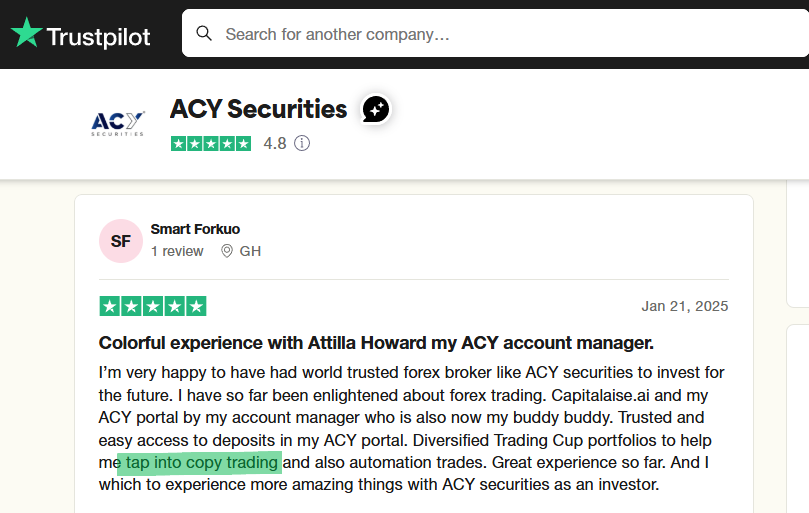
Trust Signal: Rated 4.8/5 on Trustpilot based on 1,200+ reviews.
FAQs
- What are the main risks of copy trading?
Market, liquidity, systematic, counterparty, and operational risks, plus emotional pitfalls. - How can stop-loss strategies protect your capital?
They cap losses by closing positions at set levels, preserving your funds. - What are the benefits of diversifying your copied traders?
It reduces reliance on one trader, softening the blow of poor performance. - How do emotional biases affect copy trading decisions?
They trigger impulsive moves, like chasing trends or abandoning solid strategies. - What risk management tools should I use on my platform?
Risk ratings, demo accounts, dashboards, and auto-stop features.
For more detailed insights on developing daily trading routines, risk management, and effective position sizing strategies, explore additional articles on Trading Cup. Our trading experts at ACY and FinLogix are also great resources to guide your journey towards trading excellence.

Discover Our Best Trading Signals
At Tradingcup, you can browse through a selection of signals and review past performance before you decide to copy.
Become A Signal Provider
Share your expertise and become a signal provider so other traders can copy your trades.
Stay tuned to our blog for more trader spotlights and leaderboard updates.
Trading involves risks.
Visit the Tradingcup blog through the link below for more updates: https://www.tradingcup.com/learn
For further reading, visit acy.com