
Calmar Ratio in Copy Trading: Choosing High-Performing Traders for Smarter Investments

TradingCup
MAR 11 2025
“In investing, what is comfortable is rarely profitable.” – Robert Arnott
TL;DR Summary: The Calmar ratio measures risk-adjusted returns by comparing a trader’s performance with its maximum drawdown. In copy trading, it helps you identify traders who deliver consistent, high-quality results with controlled risk.
Introduction
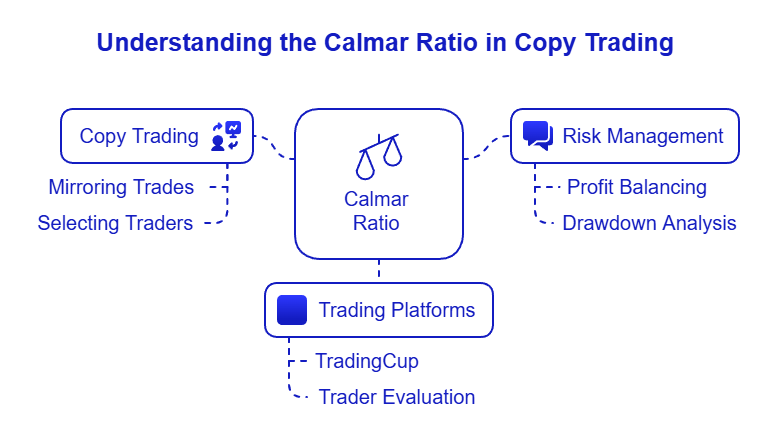
Copy trading has transformed how people invest, giving beginners a chance to benefit from the skills of experienced traders. By mirroring their trades, you can aim for profits without needing to dive deep into market analysis yourself.
However, success depends on picking the right traders to follow. High returns alone don’t give the full picture. Some traders rack up big gains but take huge risks, which could lead to serious losses for you.
That’s where the Calmar ratio comes in. It’s a standout tool that looks at risk-adjusted returns, originally created to evaluate hedge funds. This metric shows how well a trader balances profits with risks by comparing returns to their biggest losses, known as maximum drawdowns.
For copy trading, it helps you sort through countless options on platforms like TradingCup and find traders who excel at making money while keeping risks low.
In this guide, we’ll explore what the Calmar ratio is, how to calculate it, and why it matters for copy trading. You’ll also get practical tips to use it in your trading strategy and learn how it can keep your emotions in check. Whether you’re just starting or looking to improve, this tool can set you up for smarter, more sustainable results.
What Is the Calmar Ratio and Why Is It Important?
The Calmar ratio is a simple but powerful way to measure risk-adjusted returns. It was developed in the 1990s by Terry W. Young for California Managed Accounts Reports, which is where the name “Calmar” comes from. First used for hedge funds, it now applies to many markets, including forex and stocks, making it a great fit for copy trading.
So, what does it do? It tells you how much return a trader makes compared to the risk they take, focusing on their worst loss, or maximum drawdown. Unlike basic return numbers that skip over the downsides, the Calmar ratio factors in this key risk element.
Maximum drawdown is the biggest drop in a portfolio’s value from its peak to its lowest point over a set time. This gives you a clear view of how a trader handles tough times.
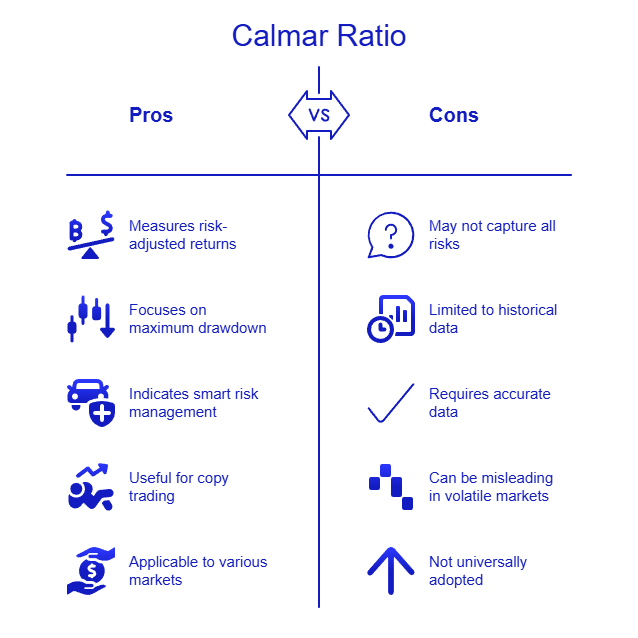
A higher Calmar ratio is a good sign. It shows the trader gets solid returns without big losses, which points to smart risk management. For copy traders, this is crucial. Platforms like TradingCup list tons of traders with different styles and results.
The Calmar ratio cuts through all that and helps you spot the ones who perform well without putting your money in danger. In unpredictable markets like forex, this focus on risk-adjusted returns can give you an edge.
Calculating the Calmar Ratio
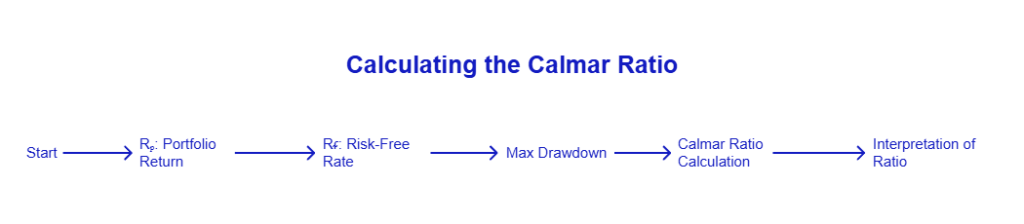
To use the Calmar ratio in copy trading, you need to know how it works. The formula is straightforward yet effective:
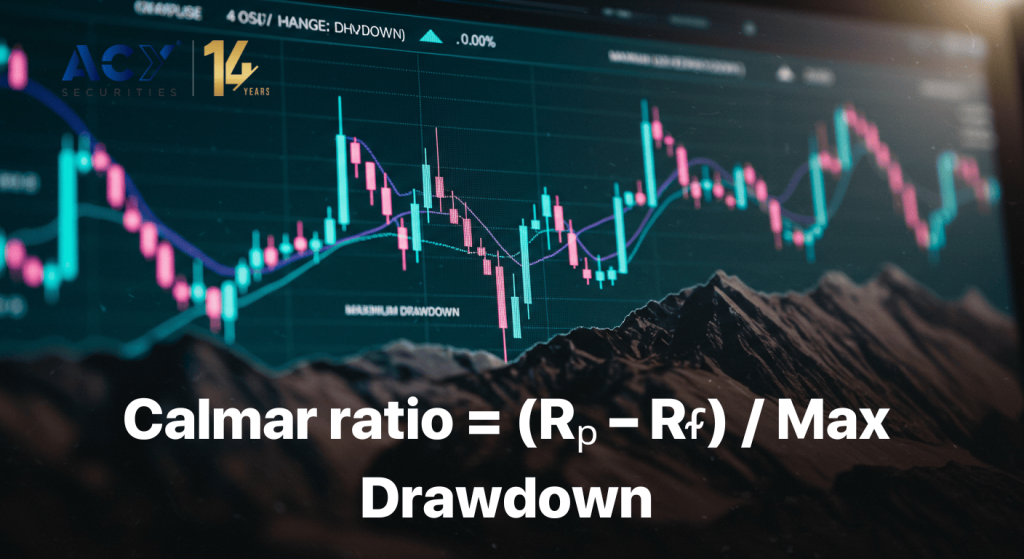
Calmar ratio = (Rₚ – Rᵳ) / Max Drawdown
Let’s break it down:
- Rₚ (Portfolio Return): This is the trader’s annualized return, often measured over three to five years. For instance, a 30% return over three years works out to about 9.14% per year.
- Rᵳ (Risk-Free Rate): The return you’d get from a safe investment, like government bonds, usually around 2%. It shows the extra return a trader earns beyond that.
- Max Drawdown: The largest percentage drop in the portfolio’s value during that time. If it falls from $10,000 to $7,000, the max drawdown is 30%.
Here’s an example. Picture a trader with a 15% annualized return, a 2% risk-free rate, and a 10% max drawdown. Plug those into the formula:
Calmar ratio = (15% – 2%) / 10% = 13% / 10% = 1.3
A ratio of 1.3 means the trader earns 1.3 units of extra return for every unit of drawdown risk. Ratios above 1 are decent, and anything over 3 is top-notch, though it depends on the market and strategy.
You’d usually calculate this over a few years to see how a trader does through different market conditions. Many copy trading platforms offer the data you need to figure this out or compare traders directly.
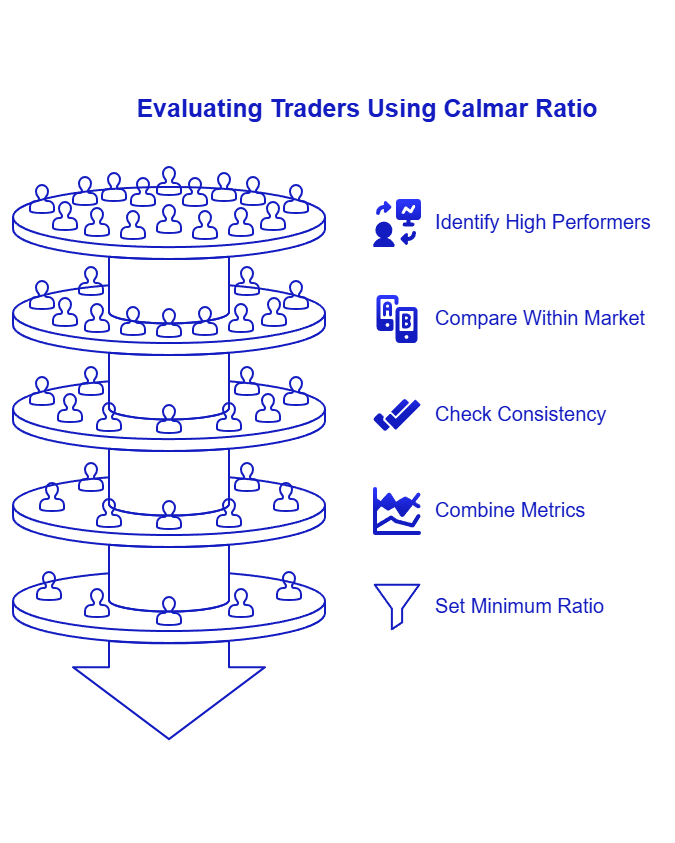
Using the Calmar Ratio in Copy Trading
Copy trading platforms like TradingCup give you access to lots of traders to follow. With so many choices, picking the best ones can be tricky. Basic stats like total return or win rate are helpful, but they don’t tell you about risk. The Calmar ratio steps in here, adding a clear way to judge traders.
Here’s how it helps you choose better traders:
- Find High Performers with Low Risk: A high Calmar ratio points to traders who make good money with small drawdowns, showing they’re good at managing risk.
- Compare in the Same Market: Look at traders in the same field, like forex, since risks vary between markets.
- Check Consistency: See how the ratio holds up over time. Stable numbers mean the trader is reliable.
- Look at the Big Picture: Combine it with other metrics like the Sharpe or Sortino ratio for a fuller view of their skills.
- Set a Minimum: Decide on a lowest acceptable ratio, say 1.5, to weed out risky traders and match your comfort level.
A trader with a high Calmar ratio isn’t just getting lucky. They’ve likely got risk management down, which is vital in wild markets like forex. Some platforms show this metric right away. If not, you can calculate it with the data they provide.
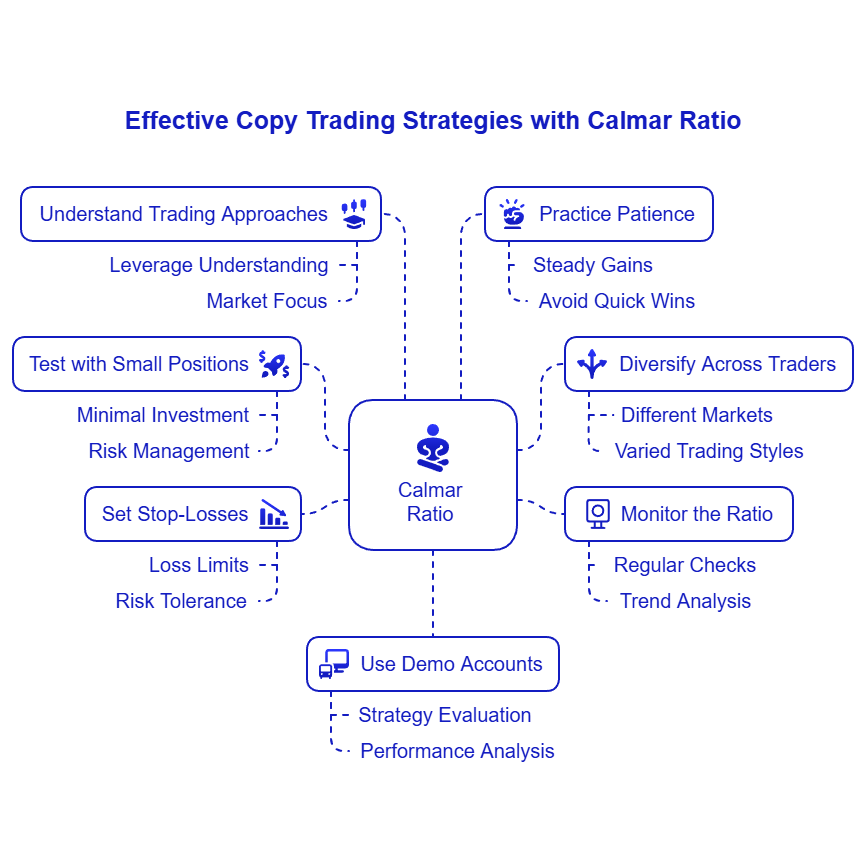
Practical Tips for Copy Trading with the Calmar Ratio
The Calmar ratio is a great tool, but it works best when you use it smartly. Here are some tips to make the most of it:
- Test with Small Positions: You might want to start copying a trader with a high Calmar ratio using just a little cash. This way, you can see how they do without risking too much.
- Diversify Across Traders: Copy a few traders with solid Calmar ratios in different markets or styles to lower your risk and keep returns steady.
- Keep an Eye on It: Check the ratio now and then. If it starts dropping, the trader might be changing how they work, so you may need to rethink things.
- Set Stop-Losses: Use platform options to limit losses, stopping the copying if they hit a level you’re not okay with.
- Learn Their Approach: Look beyond the numbers at how they trade things like leverage or what markets they focus on to make sure it fits your goals.
- Be Patient: High ratios often mean steady, careful gains. Focus on the long game, not quick wins.
- Try a Demo First: Test traders in a demo account to see how their ratio holds up without any real money on the line.
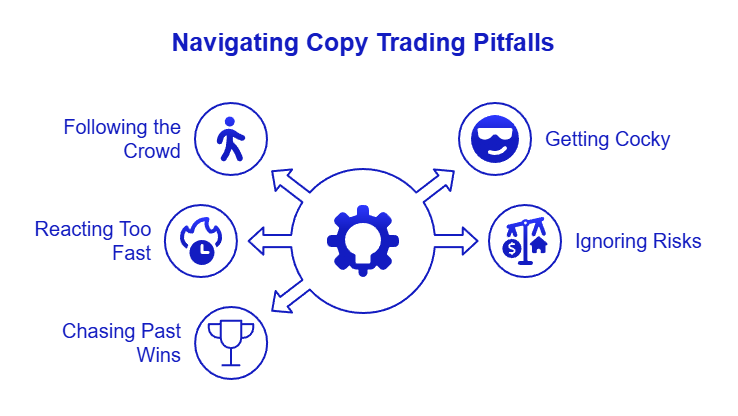
Overcoming Psychological Pitfalls in Copy Trading
Copy trading makes investing easier, but it doesn’t stop your mind from playing tricks on you. The Calmar ratio can help you stay grounded and avoid common traps:
- Following the Crowd: Just because a trader is popular doesn’t mean they’re good. One with a high Calmar ratio might beat a flashy favorite who takes big risks.
- Getting Cocky: A few wins can make you overconfident, pushing you toward risky traders. The Calmar ratio keeps you focused on what lasts.
- Reacting Too Fast: Market ups and downs can make you panic or switch traders too quickly. Sticking to the ratio helps you stay calm.
- Ignoring Risks: Focusing only on returns can blind you to danger. The Calmar ratio reminds you to think about drawdowns too.
- Chasing Past Wins: Good history doesn’t promise future success. A steady ratio over time suggests real skill.
To stay on track, set clear goals and a minimum Calmar ratio from the start. Use stop-losses on ACY platform to automate your limits. Learn more with market analysts insights. Sticking to the numbers beats letting emotions take over.
Conclusion
In copy trading, it’s not enough to just pick winners. You need traders who win wisely. The Calmar ratio helps you do that by focusing on risk-adjusted returns.
It compares profits to maximum drawdowns, showing you who’s good at making money and keeping losses low a must for lasting success.
We’ve covered its background, how to calculate it, and how to use it, plus tips and ways to avoid mental slip-ups.
The key takeaway? Use the Calmar ratio with care spread your bets, keep checking in, and stay informed to build a strong copy trading plan.
By using the Calmar ratio, you’re not just picking winners you’re picking smart winners. Start using it, and you’ll tackle copy trading with confidence, ready for better investments.
Want to step up your copy trading game? Here’s how to get started:
- Sign Up for Insights: Get tailored advice to improve your strategy. Join TradingCup.
- Track Market Events: Stay ahead with Finlogix’s Economic Calendar.
- Unlock Analytics: Find top traders with TradingCup’s tools.
Start using the Calmar ratio now for smarter, safer returns. Wondering about trust? See our Trustpilot reviews.
FAQs
What is the Calmar ratio and how do you calculate it?
It’s a way to measure risk-adjusted returns, found with: (Rₚ – Rᵳ) / Max Drawdown. Rₚ is the yearly return, Rᵳ is the risk-free rate, and Max Drawdown is the biggest drop in value.
How does the Calmar ratio help pick traders in copy trading?
It shows you traders who get high returns with low drawdowns, proving they’re good at managing risk perfect for steady copy trading wins.
What are its downsides?
It looks at past data, not the future, and only checks max drawdown, not other risks like ups and downs. Pair it with other metrics for the full story.
For more detailed insights on developing daily trading routines, risk management, and effective strategy refinement, explore additional articles on Trading Cup. External experts at ACY and FinLogix are also great resources to guide your journey towards trading excellence.

Discover Our Best Trading Signals
At Tradingcup, you can browse through a selection of signals and review past performance before you decide to copy.
Share your expertise and become a signal provider so other traders can copy your trades.
Stay tuned to our blog for more trader spotlights and leaderboard updates.
Trading involves risks.
Visit the Tradingcup blog through the link below for more updates:
https://www.tradingcup.com/learn