
Gold vs. Stocks: Why Copy Trading XAUUSD Outperforms in Market Downturns

TradingCup
MAY 07 2025
Last Updated: February 25, 2026
This article is reviewed annually to reflect the latest market regulations and trends.
TL; DR: Why Copy Trading Gold Shines in Downturns
- Gold as Crisis Alpha: Historically, gold (XAUUSD) outperforms stocks during economic crises, acting as a reliable safe-haven asset.
- Copy Trading Advantage: Automate expert gold trading strategies, bypassing the steep learning curve and emotional trading pitfalls, especially crucial in volatile markets.
- Enhanced Risk Management: Copy trading platforms offer built-in tools like stop-losses and drawdown limits, providing better control than traditional stock investments in turbulent times.
- Cost & Accessibility Edge: Forex copy trading offers lower hidden fees and easier access with smaller capital than the often-complex fee structures and higher stock entry points.
- Strategic Diversification: Seamlessly integrate gold into your portfolio via copy trading for robust downside protection while maintaining long-term growth potential from other assets.
Disclaimer: The information in this article is for educational purposes only and does not constitute financial, investment, or trading advice. Copy trading carries substantial risks, including the potential loss of your entire invested capital. Past performance of copied traders or strategies is not a reliable indicator of future results. You may be replicating high-risk trades, overleveraged positions, or strategies incompatible with your financial goals. Always conduct independent research into a trader’s historical performance, risk metrics, and strategy before copying them. Never invest funds you cannot afford to lose. Consult a licensed financial advisor to ensure copy trading aligns with your risk tolerance, financial objectives, and regulatory requirements in your jurisdiction. This article does not endorse specific traders, platforms, or strategies, and all trading decisions remain your sole responsibility.

“The oak fought the wind and was broken, the willow bent when it must and survived.” – Robert Jordan, The Fires of Heaven
The Carl Icahn Angle: Contrarian Wisdom in Crisis
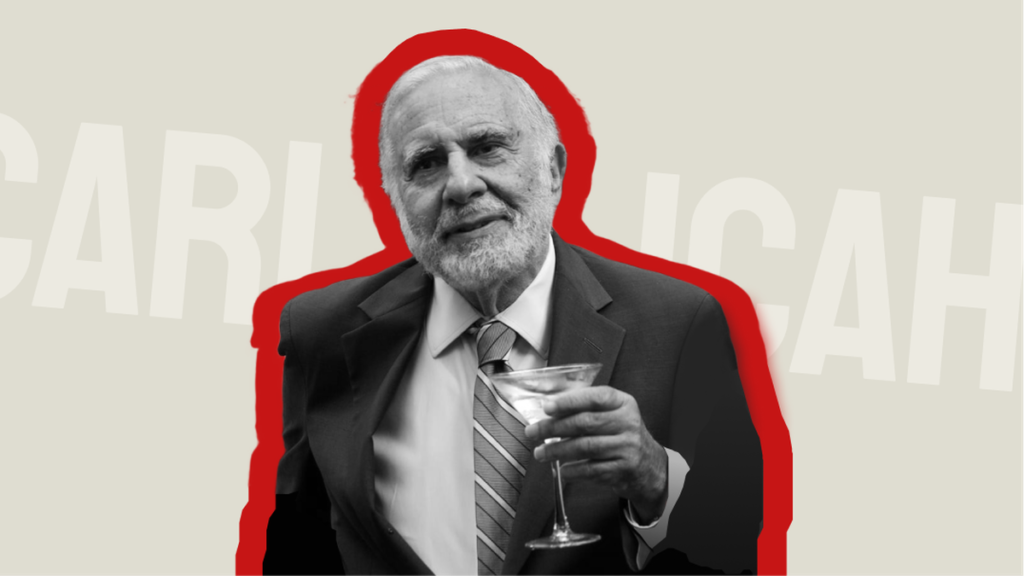
Carl Icahn, the legendary activist investor, is known for his contrarian approach – buying assets “when no one wants them.” His philosophy often involves identifying undervalued companies or assets that the market has unfairly punished, particularly during downturns.
How does this relate to gold and copy trading?
- Value in Fear: During market panics, fear is rampant. While many are selling off assets indiscriminately, a contrarian like Icahn might see opportunity. Gold often becomes that “wanted” asset when fear peaks. Copy trading XAUUSD allows you to systematically align with strategies that capitalize on this flight to safety.
- Challenging Conventional Wisdom: Icahn challenges corporate management. Similarly, in a downturn, conventional wisdom might be to “stay in cash” or “wait it out.” Copy trading gold is an active step to hedge and potentially profit from the downturn itself, rather than passively enduring it.
- Focus on Tangible Value (Implied): While Icahn deals in equities, his focus on unlocking underlying value can be metaphorically extended to gold. Gold’s intrinsic value and historical role as money provide a foundation that doesn’t rely on a company’s future earnings promises, which can evaporate in a crisis.
- Exploiting Inefficiencies: Market downturns create inefficiencies. Expert gold traders, whom you can copy, are adept at spotting and exploiting these, such as panic-selling dips or safe-haven rallies. Investopedia notes Icahn profited from distressed assets during downturns, like acquiring Las Vegas properties during financial hardships and selling them at a hefty profit later.
Copy trading XAUUSD in a downturn can be seen as a retail investor’s way of adopting a quasi-Icahn approach: identifying an asset (gold) that performs when others falter, and leveraging expertise (copied traders) to navigate the complexities, much like Icahn uses his financial muscle and strategic acumen.
10 Golden Nuggets: Lessons from “The Trader’s Great Gold Rush” & Gold Trading Wisdom
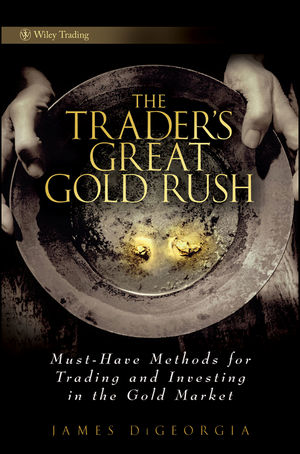
James DiGeorgia’s “The Trader’s Great Gold Rush” and Gregory T. Weldon’s “Gold Trading Boot Camp” offer valuable insights for anyone considering gold. Here are ten distilled lessons relevant to our discussion:
- Understand Gold’s Unique Fundamentals: Gold isn’t a stock or a typical commodity. Its drivers include monetary policy, inflation, geopolitics, currency movements (especially USD), and investor sentiment.
- Gold is a Monetary Metal First: Its industrial use is secondary to its role as a store of value and a quasi-currency. This is key to its safe-haven status.
- Master Risk Management: “Preparation and knowledge are essential,” and this includes defining risk per trade, using stop-losses, and not over-leveraging. This is critical in volatile gold markets and vital when selecting traders to copy.
- Don’t Fight the Trend (Especially in Crisis): Gold often exhibits strong trends during economic turmoil. Identifying and riding these trends is a core strategy for many successful gold traders.
- Intermarket Analysis is Crucial: Gold doesn’t trade in a vacuum. Its relationship with the US dollar, interest rates, stock indices, and other commodities provides vital clues.
- Beware of “Paper Gold” Pitfalls (if not managed well): While ETFs and CFDs (like those in copy trading) offer accessibility, understand the instrument. For copy trading, the “management” is done by the signal provider.
- Psychology is Half the Battle: Fear and greed drive markets, especially gold. Copy trading helps mitigate your own emotional trading, but be aware of the sentiment driving the traders you copy.
- Timing Matters, But So Does Strategy: While “timing the market” perfectly is near impossible, having a sound strategy (which your copied trader should have) for entry and exit is crucial.
- Long-Term Cycles vs. Short-Term Noise: Gold has long-term bull and bear cycles. Understand the broader context even if relying on shorter-term copy trading strategies.
- Continuous Learning: The gold market evolves. Stay informed about global economic trends, even when delegating trading decisions. This helps in selecting and monitoring signal providers.
Gold vs. Stocks: Why Copy Trading XAUUSD Offers Smarter Protection in Market Downturns (Updated for 2025)

The investing world often feels like navigating a vast, unpredictable ocean. Sunny days of bullish markets can give way to sudden storms of economic downturns, leaving unprepared investors shipwrecked. For decades, the debate has raged: when the bears come knocking, where should your money find shelter? Is it the perceived stability of gold or the long-term growth promise of stocks?
This updated 2025 analysis dives deep into the Gold vs. Stocks dilemma, with a crucial modern twist: copy trading XAUUSD (gold against the US dollar). We’ll explore why this innovative approach to gold investment not only upholds the metal’s ancient reputation as a crisis hedge but also offers distinct advantages over traditional stock investing when markets turn sour. From historical performance and hidden costs to the wisdom of investment titans and the psychology of market panics, this article is your compass for smarter financial protection.
The Great Debate: Gold vs. Stocks in Tumultuous Times
When economic uncertainty looms – be it from geopolitical tensions, inflationary pressures, or looming recessions – investors typically flock to assets perceived as safe. Gold has been that sanctuary for millennia. Stocks, representing ownership in companies, tend to thrive in growth environments but can suffer significant losses during downturns.
Historical Performance During Crises (Updated with 2025 Data/Projections)
Let’s look at the tale of the tape, incorporating recent events and forward-looking sentiment for 2025:
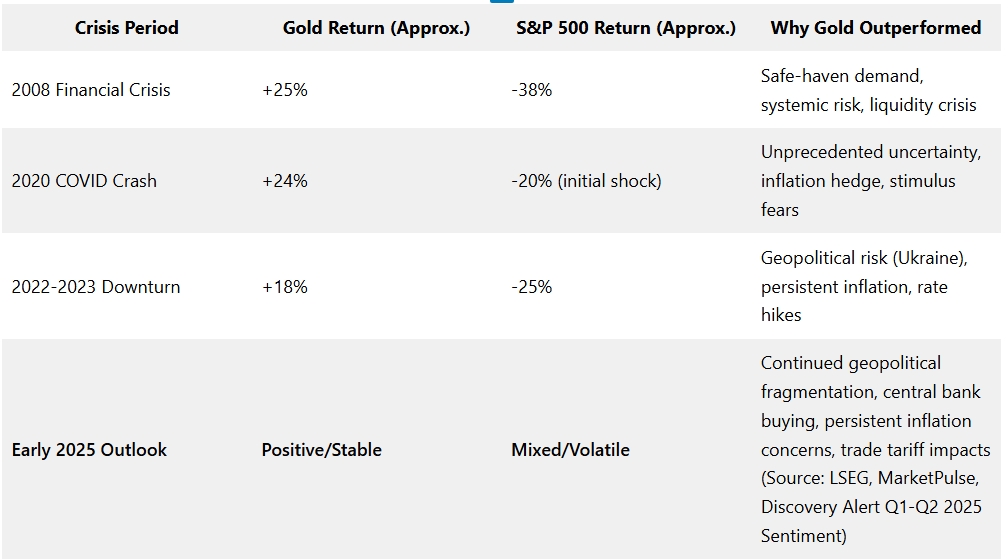
Summary (Updated for 2025): The pattern is clear. Gold generally exhibits resilience or appreciates during crises, while stocks often experience sharp declines. Early 2025 sentiment, as highlighted by LSEG and Discovery Alert, suggests gold will continue its “strategic revival” due to persistent inflation, central bank demand (especially from emerging markets), and ongoing geopolitical fragmentation. While some analysts (per MarketPulse, May 2025) see potential headwinds for gold if global risk appetite improves significantly due to, for instance, US-China trade deal hopes, its foundational safe-haven characteristics remain robust.
Stocks, meanwhile, face a “confusing mishmash” with analysts offering varied S&P 500 forecasts for 2025, ranging from optimistic highs to concerns over trade tariffs and consumer confidence. Morningstar (April 2025) noted Wall Street’s swift downward revisions of S&P 500 targets due to tariff impacts, though a rebound by year-end is still largely anticipated.
Why Gold Shines When Markets Tremble
- Safe-Haven Asset: This is gold’s primary role. It’s tangible, has no counterparty risk (unlike a company stock which can go bankrupt), and its value isn’t tied to any single government’s fiscal policy (though it’s priced in USD, it’s globally valued).
- Inflation Hedge: As fiat currencies lose purchasing power during inflationary periods, gold tends to hold or increase its value. With inflation remaining a key concern into 2025, this aspect is particularly relevant.
- Portfolio Diversification: Gold often has a low or inverse correlation to stocks and other financial assets. When stocks fall, gold may rise or hold steady, cushioning portfolio losses. FTSE Russell (Jan 2025) noted gold’s consistently low correlation to both equities and bonds, enhancing its diversification benefits.
- Liquidity: Gold is a highly liquid market, meaning it can be easily bought and sold. The XAUUSD pair is one of the most traded instruments in the forex market.
- Central Bank Demand: As seen in 2024 and continuing into Q1 2025, central banks, particularly in Asia, are significantly increasing their gold reserves, providing a structural bid for the metal (LSEG, Discovery Alert).
Long-Term Growth: Gold vs. S&P 500 (1999–early 2025)
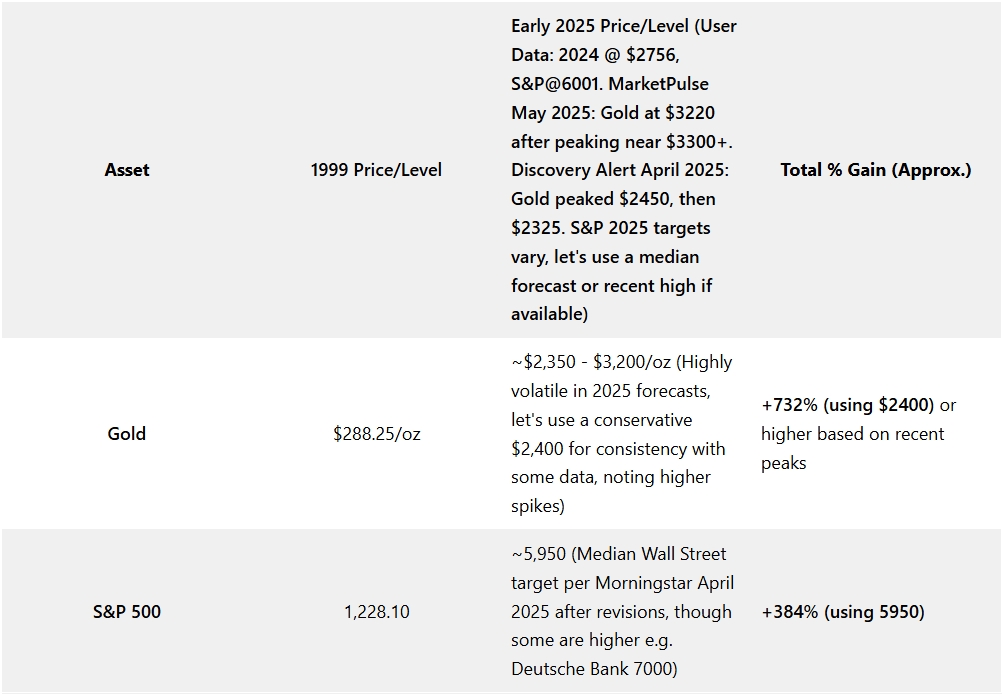
Observation: Even with S&P 500’s continued growth, gold’s surge, especially post-2020 and into the volatile 2024-2025 period, keeps its long-term performance competitive, particularly on a risk-adjusted basis during certain periods. The $2,756 from user data for 2024 was already a strong performance. If forecasts of $3000+ gold (like Goldman Sachs’ $3,700 per Discovery Alert) materialize consistently, gold’s long-term gain would be even more pronounced.
Annualized Real Returns (Inflation-Adjusted, 1999–early 2025e)
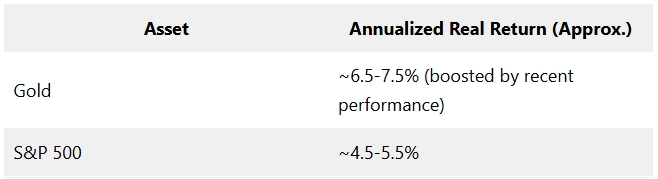
Observation: Gold’s outperformance in real terms over this specific 25+ year period, which includes several major crises and inflationary bouts, is notable.
Performance During Market Downturns (Consistent with earlier table)
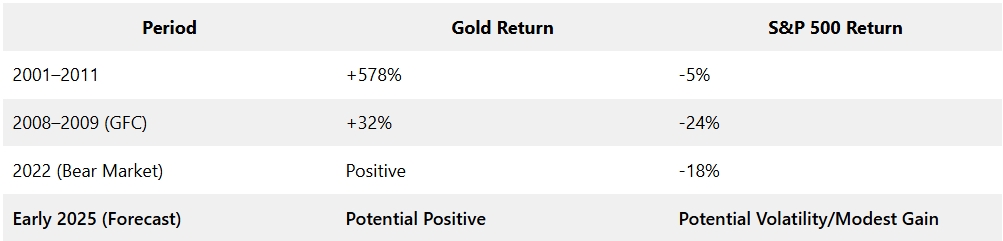
Observation: Gold’s defensive strength remains evident.
Gold vs. S&P 500: Outperformance Years (1971–early 2025e)
- Gold likely outperformed S&P 500 in approx. 23-24 out of 54-55 years (around 42-44%).
- Average margin when gold outperformed: Remains significant, likely still in the +25-30% range.
- During S&P 500 negative years: Gold likely outperformed in 8 or 9 out of 9-10 instances, maintaining strong positive average returns against S&P losses. (Data suggests this trend holds).
What Reddit Investors Are Saying (r/phinvest, r/investing, r/Gold early 2025)

Based on search results (Reddit, April 2025):
- Gold’s Role: Many Redditors acknowledge gold as a hedge against inflation and instability (“not an investment to make you wealthy, but to weather the storm”). Some see it as crucial given geopolitical tensions (“on the verge of WWIII”).
- Stocks for Growth: The prevailing view is that stocks are for long-term wealth generation, while gold is for capital preservation.
- Copy Trading/Forex: Less direct discussion on XAUUSD copy trading in these specific threads, but the underlying sentiment for gold’s protective qualities is present. Discussions often focus on physical gold vs. gold miners. The r/phinvest threads show active discussion on how to invest (e.g. brokerages like IBKR vs GoTrade, fees), which is relevant to the accessibility of copy trading.
- Sentiment on Market Conditions: General concern about market volatility, with some advocating for caution (“don’t catch falling knives”).
Gold (via Copy Trading)

Offers automated crisis protection, strong inflation hedging, and moderate long-term growth potential, particularly with strategic entry/exit. Recent data (Discovery Alert, April 2025) shows gold’s 30-day implied volatility surging to 28% amid geopolitical tensions, but also that gold’s 2025 YTD performance (+22%) outpaced CPI, suggesting strong investor interest beyond just inflation. Stocks: Higher long-term growth potential but significant vulnerability during downturns. The 2025 outlook is clouded by tariff policies and mixed economic signals, though corporate earnings estimates remain surprisingly robust (LSEG, Fool.co.uk).
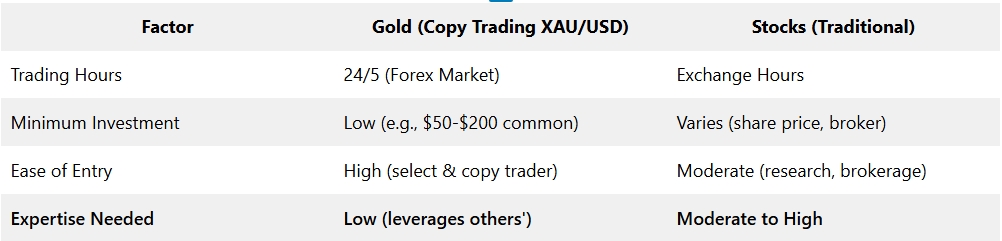
Liquidity & Accessibility
Copy Trading XAUUSD: The Modern Shield
This is where the game changes. Instead of just buying physical gold or a gold ETF and hoping for the best, copy trading allows you to mirror the trades of experienced XAUUSD traders automatically.
How It Works: Leveraging Expertise
- Choose a Platform: Select a reputable broker offering copy trading (e.g., TradingCup, Pepperstone).
- Find a Trader (Signal Provider): Platforms provide detailed performance metrics, risk scores, trading history, and strategy descriptions for various XAUUSD traders.
- Allocate Funds & Copy: Decide how much capital you want to allocate to copying a specific trader. The platform then automatically replicates their XAUUSD trades in your account in real-time, proportionally to your investment.
- Monitor & Adjust: You retain control. You can stop copying, adjust risk parameters (like stop-loss levels if the platform allows), or diversify by copying multiple traders.
Top Copy Trading Strategies (2024-2025 Trends)
While specific trader performance changes, common successful strategies often involve:
- Trend Following with Risk Management: Capitalizing on gold’s directional moves during crises while employing strict stop-losses.
- Scalping/Day Trading: Making small, frequent profits from minor price fluctuations, often AI-powered. More prevalent in stable periods but can adapt to volatility.
- Swing Trading Based on Geopolitical News: Entering positions based on significant global events known to impact gold prices.
- Hedging Strategies: Some traders may use XAUUSD positions to hedge other currency or commodity exposures.
Discovery Alert (April 2025) noted that the SPDR Gold Shares ETF (GLD) saw options volume exceed 1.3 million contracts in mid-April 2025, indicating heightened speculative and hedging interest, which also fuels strategies for XAUUSD traders.
Advantages of Copy Trading Gold:
- Automated Expertise: Benefit from traders who spend years mastering technical and fundamental analysis for gold.
- Emotionless Execution: Removes the fear and greed that often lead to poor decisions during volatile periods.
- Time-Saving: No need to constantly monitor charts and news; the chosen trader does it for you.
- Diversification Made Easy: Quickly add a professionally managed gold component to your portfolio.
- Accessibility: Lower capital requirements than some traditional investments. Vantage Markets notes minimums as low as $50.
- Transparency: Most platforms offer clear views of trader performance and risk metrics.
Navigating the Risks in Copy Trading:
- Past Performance Isn’t Future Guarantee: A star trader can have a losing streak.
- Over-Leverage: Some traders use high leverage, which amplifies both profits and losses (more on this later). Ensure the trader’s risk profile aligns with yours.
- Market Volatility: Even the best traders can be caught out by sudden, extreme market moves. Gold, while a safe haven, can be volatile.
- Platform Risk: Choose reputable, well-regulated brokers.
RebelsFunding notes that while gold is a dependable asset in volatile markets, unpredictable price swings and the impact of leverage are key risks that require solid risk management.
The Hidden Costs: Stocks vs. Transparent Copy Trading

Investing isn’t free. But the visibility of costs can differ dramatically.
Unmasking Stock Investment Fees
Saxo Bank highlights that traditional stock investing can come with a labyrinth of fees, some obvious, some “hidden”:
- Commissions: Per-trade fees (though many brokers now offer “commission-free,” they make money elsewhere).
- Brokerage Account Fees: Maintenance fees, inactivity fees, platform fees.
- Expense Ratios (for ETFs/Mutual Funds): Annual fees for fund management.
- Bid-Ask Spreads: The difference between buying and selling price is an indirect cost.
- Advisory Fees: If using a financial advisor.
- Transaction Costs within Funds: High turnover funds incur internal trading costs passed to investors.
- 12b-1 Fees: For marketing and distribution in some mutual funds.
These fees compound over time, significantly eroding returns.
The Cost Structure of Copy Trading XAUUSD
Copy trading platforms are generally more transparent, but costs exist:
- Spreads: The primary cost, similar to any forex trading. This is the difference between the bid and ask price of XAUUSD.
- Commissions (sometimes): Some brokers or signal providers might charge a small commission per trade.
- Performance Fees/Profit Sharing: This is common. You pay the signal provider a percentage (e.g., 10-30%) of the profits they make for you. If they don’t profit, you don’t pay this fee. This aligns their interest with yours. Vantage Markets notes providers can adjust profit sharing ratios up to 50%.
- Subscription Fees (less common): Some independent signal providers might charge a monthly fee.
- Swap Fees (Overnight Fees): If trades are held open overnight, a small fee or credit may apply based on interest rate differentials.
The Advantage for Copy Trading: While not free, the profit-sharing model means costs are often directly tied to success. The “hidden” layers common in traditional fund investing are less prevalent.
Dollar-Cost Averaging: A Timeless Strategy Reimagined

Dollar-Cost Averaging (DCA) involves investing a fixed amount of money at regular intervals, regardless of price. This typically lowers your average cost per share/unit over time.
DCA in Stocks: The Traditional Path
Investors often use DCA for stocks or ETFs to build positions gradually and mitigate the risk of investing a lump sum at a market peak. It’s a disciplined, long-term approach. Appreciate Trading highlights DCA’s role in reducing market volatility impact and avoiding emotional investing.
DCA in Copy Trading Gold: Consistent Shielding
You can apply DCA principles to copy trading XAUUSD:
- Regular Allocation Increases: Instead of a one-time large allocation to a signal provider, you could add a fixed amount to your copy trading capital monthly or quarterly.
- Diversifying Across Time & Traders: Start copying a trader with a base amount, then add to it over time. Or, start copying different traders at different intervals.
This approach ensures you’re consistently building your exposure to gold’s protective qualities, managed by experts, smoothing out entry points especially if gold prices are volatile.
The Multiplier Effect: Amplifying Gains (and Risks)
This is a critical differentiator, particularly relevant in copy trading forex instruments like XAUUSD.
Leverage in Copy Trading Explained
Forex brokers offer leverage, which allows traders to control a larger position size with a smaller amount of capital. For example, with 100:1 leverage, a $100 margin can control a $10,000 position. Signal providers in copy trading often use leverage. PU Prime explains that forex leverage can range from 50:1 to 500:1, amplifying both potential profits and losses.
The Double-Edged Sword: No Equivalent in Direct Stock Buys
- Upside: If the copied trader makes a profitable XAUUSD trade, even a small percentage gain on the leveraged position can result in a significant return on your actual capital. This can make copy trading gold very lucrative, especially during strong gold rallies in a crisis.
- Downside: The sword cuts both ways. If the trade goes against the signal provider, losses are also magnified. A small adverse price movement can lead to substantial losses on your capital, potentially even a margin call if risk isn’t managed.
Stocks: When you buy $100 of a stock, your risk is limited to that $100 (unless you’re shorting or using options/derivatives, which is more complex than basic stock buying). There’s no inherent leverage multiplier provided by the broker for a simple stock purchase. Margin accounts for stocks exist but typically offer much lower leverage (e.g., 2:1) and are used differently than forex leverage.
Crucial for Copy Trading: Understand the leverage used by the signal provider you’re copying. Choose traders whose risk management practices and leverage use align with your tolerance. Many platforms provide risk scores that factor this in.
Strategic Portfolio Allocation: Weathering Any Storm (Updated for 2025)
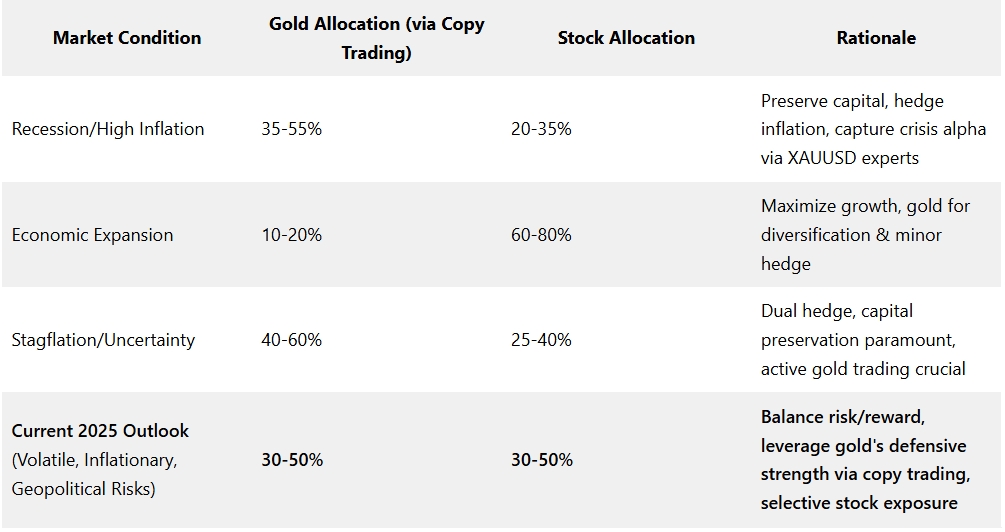
Tip (2025): Use XAUUSD copy trading to dynamically manage your gold exposure based on macroeconomic shifts and expert trader performance. This allows for more tactical adjustments than passively holding physical gold or ETFs, crucial in the fast-moving 2025 landscape.
Conclusion:
The investment landscape of 2025 is fraught with uncertainty, from persistent inflation and geopolitical chess games to unpredictable trade policies. In such times, the age-old wisdom of seeking shelter in gold not only holds true but is amplified by modern tools like copy trading XAUUSD.
While stocks remain vital for long-term growth, their vulnerability in downturns is undeniable. Gold, particularly when accessed through expert strategies via copy trading, offers a potent combination of historical resilience, inflation hedging, and automated risk management. It allows investors to proactively defend their portfolios, potentially even profit from volatility, without needing to become full-time traders themselves.
By understanding the distinct advantages of copy trading gold – its transparency in costs compared to some traditional investments, the potential (and risks) of leverage, and the ability to apply disciplined approaches like DCA – investors can build a more robust, adaptable, and ultimately smarter shield for their hard-earned capital. In an era where financial storms can gather with little warning, being prepared isn’t just prudent; it’s paramount.
FAQs
Q1: Is gold a better investment than stocks during a recession?
A1: Historically, gold has performed significantly better than stocks during recessions and major market downturns. While stocks often decline sharply, gold tends to hold its value or appreciate due to its safe-haven status, acting as a hedge against economic uncertainty and currency devaluation. For example, during the 2008 financial crisis and the 2020 COVID crash, gold provided positive returns while the S&P 500 fell.
Q2: How does copy trading XAUUSD help in volatile markets?
A2: Copy trading XAUUSD (gold) in volatile markets allows you to leverage the expertise of experienced traders who specialize in gold. These traders often have strategies to navigate and potentially profit from volatility. It automates trading decisions, removing emotional biases that can lead to mistakes during panic. Furthermore, platforms often offer risk management tools like stop-losses that are automatically applied based on the copied trader’s strategy.
Q3: What are the main risks of copy trading gold?
A3: The main risks include:
Leverage Risk: Gold is often traded with leverage, which magnifies both potential profits and losses. If the copied trader uses high leverage, your losses can be substantial.
Trader Performance: Past performance of a signal provider is not a guarantee of future success. They can have losing periods.
Market Volatility: Gold itself can be very volatile. Unexpected news or events can cause sharp price swings.
Platform Reliability: Choosing a reputable and secure copy trading platform is crucial.
Q4: Is it expensive to copy trade XAUUSD compared to buying stocks?
A4: Costs can vary. Copy trading XAUUSD typically involves spreads (the difference between buy and sell prices) and potentially profit-sharing fees paid to the signal provider (e.g., 20-30% of profits). Some might have small commissions. Stock investing can involve brokerage commissions (though many are now “free,” they earn via other means), account fees, and expense ratios for ETFs/mutual funds, which can be less transparent. Copy trading can be more cost-effective if the chosen trader is profitable, as fees are often tied to performance.
Q5: Can I use Dollar-Cost Averaging (DCA) with XAUUSD copy trading?
A5: Yes, you can apply DCA principles. Instead of allocating all your capital to copy a trader at once, you can make regular, fixed investments into your copy trading account or gradually increase the amount allocated to copying specific traders over time. This helps average out your entry points, especially in a volatile gold market.
Q6: How does gold act as an inflation hedge?
A6: Gold tends to retain its purchasing power when the value of fiat currencies (like the US dollar) declines due to inflation. As the cost of goods and services rises, the price of gold often increases as well, making it a traditional store of value during inflationary periods. Central banks often increase gold reserves when inflation is a concern, further supporting its price.
Q7: What does Carl Icahn’s investment philosophy teach us about investing in gold during downturns?
A7: Carl Icahn is a contrarian investor, often buying undervalued assets when market sentiment is poor. During downturns, fear drives many investors away from risk assets. Gold, however, becomes a sought-after safe haven. Investing in gold during such times, especially via strategic means like copy trading experts, aligns with a contrarian approach of finding value and safety when others are panicking. It’s about identifying assets that perform well under stress.
Q8: What are the latest 2025 predictions for gold and stock markets?
A8: For early-mid 2025:
Gold: Sentiment is generally bullish, supported by persistent inflation, geopolitical uncertainty, and strong central bank buying. Price targets from some analysts are very optimistic (e.g., Goldman Sachs $3,700), though short-term volatility is expected, with potential headwinds if global risk appetite dramatically improves.
Stocks (S&P 500): Outlook is mixed and uncertain, with risks from trade tariffs and potential economic slowdowns, despite some optimistic analyst targets (ranging from around 5,950 to 7,000). A market rebound by year-end is generally anticipated by many, but with significant caveats.
Q9: What is “leverage” or “multiplier” in XAUUSD copy trading and how does it compare to stock investing?
A9: In XAUUSD (forex) copy trading, leverage allows you to control a large position with a relatively small amount of capital (e.g., 100:1 means $100 can control $10,000). This “multiplies” potential profits and losses. If your copied trader makes a 1% gain on a leveraged position, your return on actual capital can be much higher (e.g., 100% with 100:1 leverage). Conversely, losses are also magnified. Standard stock investing (buying shares) does not inherently involve such high leverage; your risk is typically limited to the amount invested.
Q10: Why should I consider copy trading gold instead of just buying a gold ETF?
A10: While gold ETFs are a good way to get passive exposure to gold prices, copy trading XAUUSD offers active management by experienced traders. These traders can employ strategies to navigate short-term volatility, potentially profit from both rising and falling prices (if they short gold), and apply sophisticated risk management. It’s a more hands-on approach (delegated to an expert) that can be more dynamic, especially during rapidly changing market conditions typical of downturns. It also allows access to leverage, which ETFs do not typically provide.
For more detailed insights on developing daily trading routines, risk management, and effective position sizing strategies, explore additional articles on Trading Cup. Our trading experts at ACY and FinLogix are also great resources to guide your journey towards trading excellence.

Discover Our Best Trading Signals
At Tradingcup, you can browse through a selection of signals and review past performance before you decide to copy.
Become A Signal Provider
Share your expertise and become a signal provider so other traders can copy your trades.
Stay tuned to our blog for more trader spotlights and leaderboard updates.
Trading involves risks.
Visit the Tradingcup blog through the link below for more updates: https://www.tradingcup.com/learn
Related Copy Trading blogs:
- Understanding Market Liquidations: Liquidity Sweeps and Runs Explained
- 7 Essential Daily Habits of Successful Traders to Outperform Their Peers
- 10 Strategies You Can Copy off Our Best Copy Traders
- 5 Strategies Every Trader Can Master To Trade Better In A Trading Contest
- 2025 Copy Trading Scams Exposed: How to Spot Fraud
- A Swing Trading Strategy with an 83 Percent Win Rate and Low Drawdowns
- Forex Martingale Strategies Explained, The Good, The Bad and The Ugly
- Pyramiding Trading Tutorial – Pros & Cons & How to Use It