
Copy Trading VS LLMs: Apple says AI fails 100% at High Complexity Problems?

TradingCup
JUN 11 2025
Last Updated: June 11, 2025
This article is reviewed annually to reflect the latest market regulations and trends.
TL;DR: Key Points to Remember
- When markets get complex, AI takes a fall, A recent Apple study has revealed it all.
- For now, a human touch you can’t replace, Copy trading helps you keep a steady pace.
- With high-level logic, LLMs may stall, Leaving you to take the market’s call.
- While AI develops, a proven guide is key, Copy a pro for your trading decree.
- Make smarter choices, don’t follow the hype, Choose a strategy that’s the perfect type.
Disclaimer: The information in this article is for educational purposes only and does not constitute financial, investment, or trading advice. Copy trading carries substantial risks, including the potential loss of your entire invested capital. Past performance of copied traders or strategies is not a reliable indicator of future results. You may be replicating high-risk trades, overleveraged positions, or strategies incompatible with your financial goals. Always conduct independent research into a trader’s historical performance, risk metrics, and strategy before copying them. Never invest funds you cannot afford to lose. Consult a licensed financial advisor to ensure copy trading aligns with your risk tolerance, financial objectives, and regulatory requirements in your jurisdiction. This article does not endorse specific traders, platforms, or strategies, and all trading decisions remain your sole responsibility.
“The four most dangerous words in investing are: ‘This time it’s different.'” – Sir John Templeton
Copy Trading VS LLMs: Apple says AI fails 100% at High Complexity Problems?
The world of finance is abuzz with the promise of Artificial Intelligence. From automating trades to predicting market movements, AI, particularly Large Language Models (LLMs), is being touted as the next revolution in trading. But what if this revolution is built on a shaky foundation? A recent, detailed study by Apple researchers has sent ripples through the tech and finance communities, suggesting that even the most advanced AI models have a critical flaw: they crumble under the weight of complexity.
This revelation brings a new perspective to the ongoing debate between relying on nascent AI for financial decisions and the time-tested practice of copy trading. As we stand at this crossroads, it’s crucial to understand the real capabilities and limitations of these technologies to make informed investment choices.
What is Copy Trading?
Copy trading is a portfolio management strategy where a trader copies the trades of another, more experienced trader. This is typically done through a social trading platform where traders can view the performance and trading history of others and choose to automatically replicate their trades in their own accounts. The core idea is to leverage the expertise of seasoned professionals without needing to possess the same level of market knowledge or analytical skill.
What is AI in Forex?
AI in the Forex (foreign exchange) market refers to the use of artificial intelligence and machine learning algorithms to analyze vast amounts of market data, identify patterns, and execute trades. The goal is to make trading more efficient, remove human emotion from the equation, and potentially achieve higher returns. This can range from simple automated trading bots to sophisticated LLMs that can process news, social media sentiment, and economic indicators to inform trading decisions.
Why Do People Plan to Use AI in Forex?
The allure of AI in Forex is undeniable. Traders are drawn to the potential for:
- 24/7 Market Analysis: The Forex market operates around the clock, and AI can monitor it continuously without fatigue.
- Speed of Execution: AI can execute trades in a fraction of a second, capitalizing on fleeting market opportunities.
- Data Processing Power: AI can analyze more data points than any human, potentially uncovering hidden trading signals.
- Emotionless Trading: By removing fear and greed, AI promises more disciplined and logical trading decisions.
However, the recent research from Apple challenges the very foundation of this promise.
Why Apple’s Research Matters?
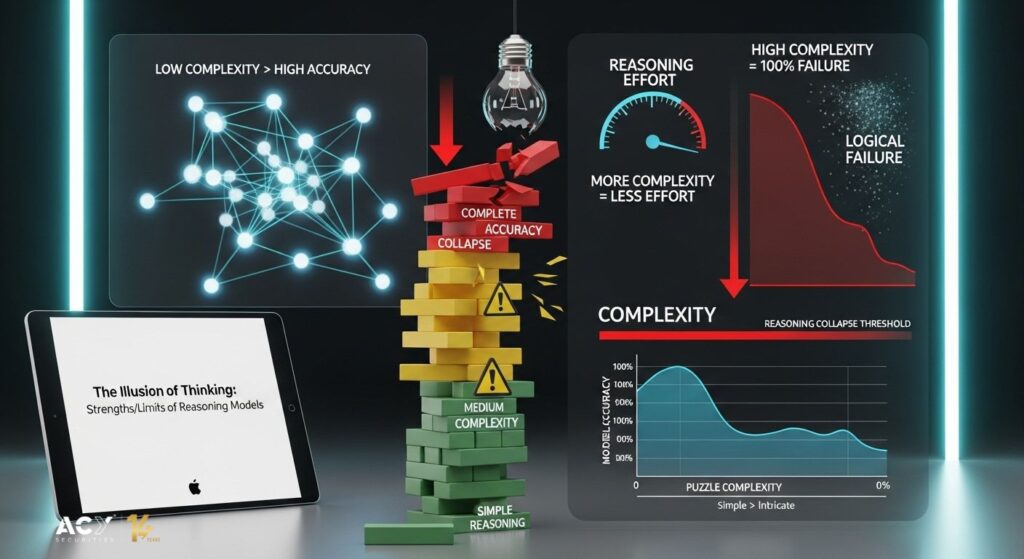
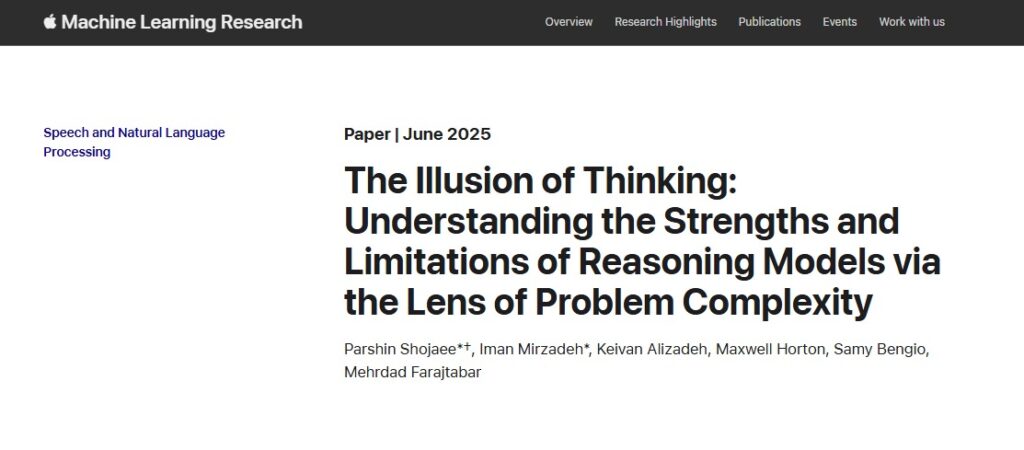
Apple’s study, “The Illusion of Thinking: Understanding the Strengths and Limitations of Reasoning Models,” provides a sobering look at the true capabilities of modern LLMs. The researchers designed a series of controllable puzzle environments to test the reasoning abilities of these models as complexity increased. The findings were startling.
While LLMs performed well on low-complexity tasks, their accuracy plummeted as the problems became more challenging. In fact, beyond a certain complexity threshold, the models experienced a “complete accuracy collapse,” failing 100% of the time. The study also revealed a counter-intuitive behavior: as problems became more complex, the AI models actually reduced their “reasoning effort,” suggesting a fundamental limitation in their ability to handle intricate logical steps.
How Will This Affect Trading Using AI?
The implications for AI in trading are profound. The financial markets are the epitome of a high-complexity environment. They are dynamic, influenced by a multitude of interconnected factors, and notoriously unpredictable. If an LLM fails at a complex puzzle with a defined set of rules, how can it be trusted to navigate the chaotic and ever-changing landscape of the Forex market?
Apple’s research suggests that relying solely on AI for trading, especially in volatile conditions, could be a recipe for disaster. The “complete accuracy collapse” observed in the study could translate to catastrophic financial losses in a real-world trading scenario.
The Pros and Cons of AI in Trading
Pros:
- Speed and Efficiency: AI can process information and execute trades at superhuman speeds.
- Data Analysis: It can analyze vast datasets to identify potential trading opportunities.
- Emotionless Decision-Making: AI is not swayed by fear or greed.
Cons:
- Failure at High Complexity: As Apple’s research shows, AI can fail completely when faced with complex problems.
- Lack of True Understanding: AI models are masters of pattern recognition, not genuine comprehension. They may not understand the underlying economic principles driving market movements.
- Data Contamination: The performance of AI can be skewed by contaminated or irrelevant data, a common issue in financial markets.
- Overthinking and Inefficiency: The study also highlighted that on simpler tasks, LLMs can “overthink,” wasting computational resources and exploring incorrect solutions even after finding the right one.
Why You Can Just Copy Trade for Now While AI is Still in Development
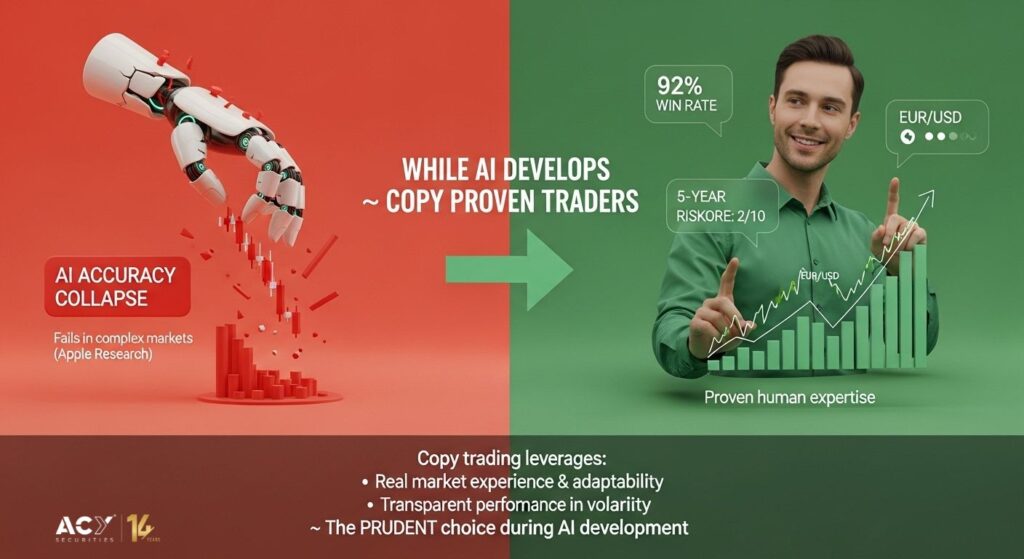
Given the current limitations of AI, copy trading emerges as a more prudent and reliable strategy for most traders. Here’s why:
- Proven Human Expertise: Copy trading allows you to leverage the skills of traders with a proven track record of navigating complex market conditions.
- Real-World Experience: Experienced traders have lived through market cycles and have a nuanced understanding of market dynamics that AI currently lacks.
- Adaptability: Human traders can adapt their strategies in real-time based on their intuition and experience, something AI struggles with.
- Transparency: Reputable copy trading platforms provide detailed performance metrics, allowing you to make an informed decision about who to follow.
How Steve Jobs Thinks About Copy Trading

While Steve Jobs was a visionary in the tech world, not finance, his philosophy on innovation and learning from the best offers a compelling parallel to the concept of copy trading. Jobs famously said, “Good artists copy, great artists steal.” He didn’t mean this in a literal sense of plagiarism, but rather in the idea of taking the best ideas from various sources, internalizing them, and then building upon them to create something new and revolutionary.
In the context of trading, a novice trader can be seen as the “good artist” who copies the strategies of successful traders to learn the ropes. By observing and replicating the actions of seasoned professionals, they gain invaluable insights into market analysis, risk management, and trading psychology. This process of “copying” is a crucial step in their journey to becoming a “great artist”, a trader who has assimilated these lessons and developed their own unique and profitable trading style.
Jobs believed in standing on the shoulders of giants. For a new trader, the “giants” are the experienced professionals who have already navigated the treacherous waters of the financial markets. Copy trading, in a Jobsian sense, is not a sign of weakness but a smart and efficient way to accelerate the learning curve and build a foundation for future success.
10 Lessons from “The Playbook: An Inside Look at How to Think Like a Professional Trader”

For those looking to deepen their understanding of professional trading, Mike Bellafiore’s “The Playbook” offers a wealth of knowledge. Here are 10 key lessons from the book that can complement a copy trading strategy:
- Develop a Detailed Playbook: Professional traders don’t just trade on whims. They have a detailed playbook of setups that they have rigorously tested and refined.
- Focus on Your A+ Trades: Identify the trades that you are best at and focus on executing them flawlessly.
- The Importance of Review: The most successful traders are relentless in reviewing their trades to identify what they did right and wrong.
- Adapt to the Market: The market is always changing, and your strategies must adapt with it.
- Think in Terms of Risk vs. Reward: Every trade should be evaluated based on its potential risk and reward.
- Patience is a Virtue: Sometimes the best trade is no trade at all. Wait for your A+ setup.
- Control Your Emotions: Emotional discipline is what separates the pros from the amateurs.
- The Process is More Important Than the Outcome: Focus on making good trading decisions, and the profits will follow.
- Continuous Learning: The market is a great teacher, but you must be a willing student.
- Find a Mentor: Learning from someone who has already achieved what you want to achieve is invaluable.
Here’s How to Use AI with Copy Trading
While AI may not be ready to take the reins completely, it can still be a powerful tool to enhance your copy trading strategy. Here are some tips on how to use AI with copy trading like a pro:
- AI for Analysis: Use AI-powered tools to analyze the performance of different traders on a copy trading platform. This can help you identify traders with consistent returns and a risk profile that aligns with your own.
- AI for Risk Management: Use AI to set more dynamic stop-loss and take-profit orders based on real-time market volatility.
- AI for Market Sentiment: Leverage AI tools that analyze news and social media to gauge market sentiment, which can help you decide when to start or stop copying a particular trader.
For a more detailed guide and sample prompts, check out this article on How to Use AI with Copy Trading Like a Pro.
Why TradingCup is a Top Copy Trading Platform
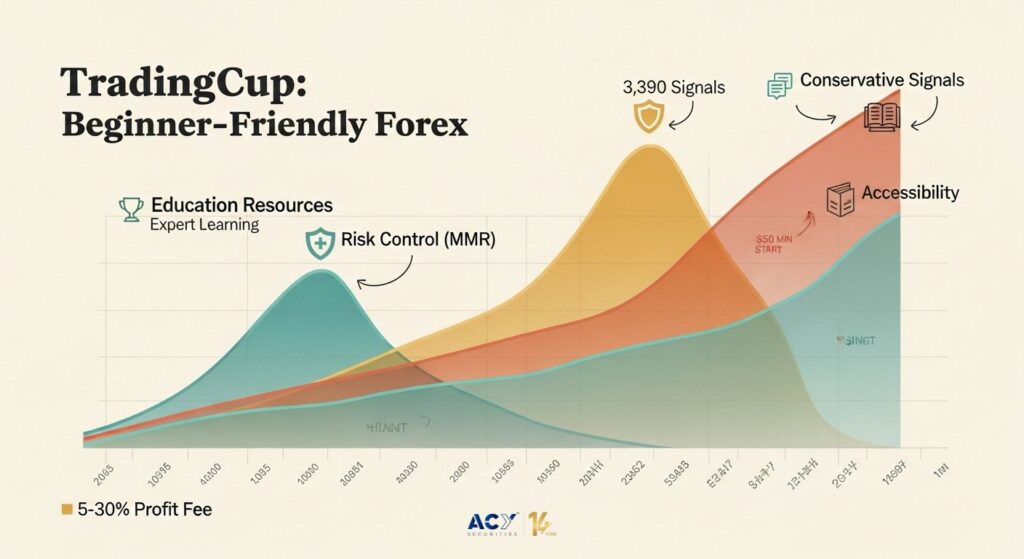
When it comes to choosing a copy trading platform, you want one that is reliable, transparent, and offers a wide range of experienced traders to follow. TradingCup has emerged as a leader in this space, offering a user-friendly platform with advanced features for both novice and experienced traders. If you’re looking for an alternative to platforms like eToro, this guide on the Best eToro Copy Trading Alternative is a great place to start.
Your Guide and Checklist for Smarter Trading Decisions
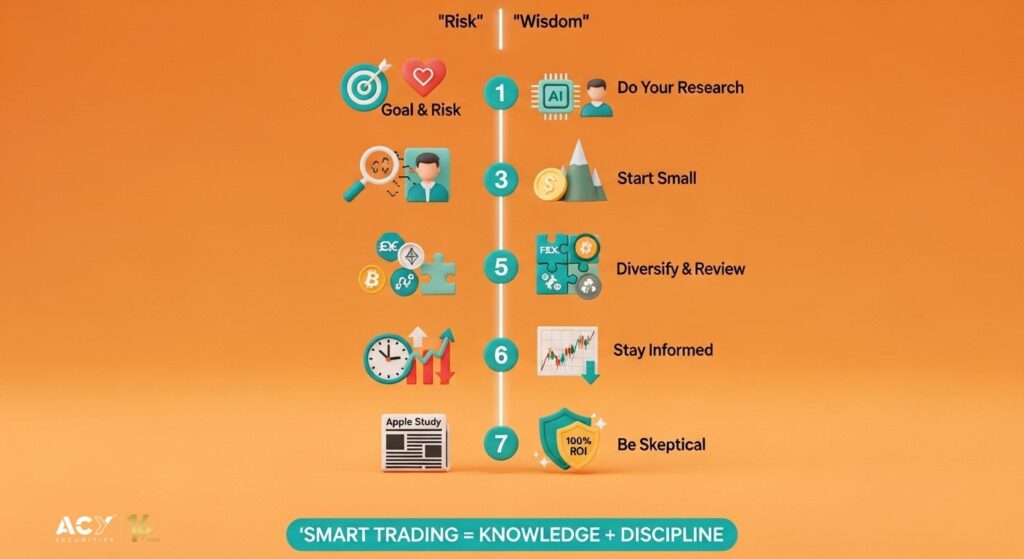
- Understand Your Goals and Risk Tolerance: Before you invest a single dollar, know what you want to achieve and how much risk you’re willing to take.
- Do Your Research: Whether you’re considering AI trading or copy trading, do your due diligence. Understand the technology, the platform, and the people you’re trusting with your money.
- Start Small: Don’t go all-in on a new strategy. Start with a small amount of capital that you’re willing to lose.
- Diversify: Don’t put all your eggs in one basket. If you’re copy trading, consider following multiple traders with different strategies.
- Monitor and Review: Continuously monitor your investments and review your strategy. The market is dynamic, and your approach should be too.
- Stay Informed: Keep up with market news and research, like the Apple study, to stay ahead of the curve.
- Be Skeptical of “Too Good to Be True”: If a strategy promises guaranteed high returns with no risk, it’s likely a scam.
A Hybrid Approach to a Smarter Future
The future of trading is not a binary choice between human and machine. The Apple study serves as a crucial reminder that while AI is a powerful tool, it is not yet a panacea for the complexities of the financial markets. For now, a hybrid approach that combines the proven expertise of human traders through copy trading with the analytical power of AI seems to be the most prudent path forward. By understanding the strengths and weaknesses of both, you can make smarter, more informed decisions and position yourself for long-term success in the exciting world of trading.
Frequently Asked Questions (FAQ)
1. What are Large Reasoning Models (LRMs)?
Large Reasoning Models (LRMs) are a new generation of language models designed to generate detailed thinking processes before providing an answer. They aim to improve performance on reasoning-heavy tasks.
2. How does problem complexity affect the accuracy of these models?
Research shows that the accuracy of LRMs declines as problem complexity increases, eventually leading to a complete collapse where they fail to find the correct solution.
3. What is the “overthinking” phenomenon in LRMs?
On simpler problems, LRMs sometimes find the correct solution early on but continue to explore incorrect alternatives, a phenomenon termed “overthinking” that leads to inefficiency.
4. Do LRMs perform better than standard Large Language Models (LLMs)?
It depends on the complexity of the task. Standard LLMs can outperform LRMs on low-complexity problems, while LRMs show an advantage at medium complexity. At high complexity, both types of models tend to fail.
5. Can providing an algorithm to an LRM improve its performance?
Surprisingly, no. Studies have shown that even when provided with an explicit algorithm, the performance of LRMs does not significantly improve on complex tasks, highlighting limitations in their ability to follow logical steps.
(Disclaimer: This article is for informational and educational purposes only. It should not be considered financial advice. Always conduct your own research and consult with a qualified financial advisor before making any investment decisions.)
For more detailed insights on developing daily trading routines, risk management, and effective position sizing strategies, explore additional articles on Trading Cup. Our trading experts at ACY and FinLogix are also great resources to guide your journey towards trading excellence.

Discover Our Best Trading Signals
At Tradingcup, you can browse through a selection of signals and review past performance before you decide to copy.
Become A Signal Provider
Share your expertise and become a signal provider so other traders can copy your trades.
Stay tuned to our blog for more trader spotlights and leaderboard updates.
Trading involves risks.
Visit the Tradingcup blog through the link below for more updates: https://www.tradingcup.com/learn
Related Copy Trading blogs:
- Understanding Market Liquidations: Liquidity Sweeps and Runs Explained
- 7 Essential Daily Habits of Successful Traders to Outperform Their Peers
- 10 Strategies You Can Copy off Our Best Copy Traders
- 5 Strategies Every Trader Can Master To Trade Better In A Trading Contest
- 2025 Copy Trading Scams Exposed: How to Spot Fraud
- A Swing Trading Strategy with an 83 Percent Win Rate and Low Drawdowns
- Forex Martingale Strategies Explained, The Good, The Bad and The Ugly
- Pyramiding Trading Tutorial – Pros & Cons & How to Use It