
Pros and Cons of Copy Trading: TradingCup Guide

TradingCup
APR 08 2025
Last Updated: April 08, 2025
This article is reviewed annually to reflect the latest market regulations and trends.
TL; DR:
Copy trading is a popular investment strategy allowing individuals to replicate trades of experienced traders. Here’s a quick overview:
Pros:
- Accessibility: Ideal for beginners; no deep market knowledge required.
- Time-Efficiency: Automates trades, saving time for busy investors.
- Diversification: Follow multiple traders across various asset classes to spread risk.
- Learning Opportunity: Observe expert strategies to improve your understanding.
- Potential Returns: High returns are possible with skilled signal providers.
Cons:
- Risk Exposure: Losses from copied traders directly impact followers.
- Limited Control: Relinquishes decision-making to others.
- Fees & Costs: Platform commissions can reduce profitability.
- Overreliance: Dependence on trader performance limits personal growth.
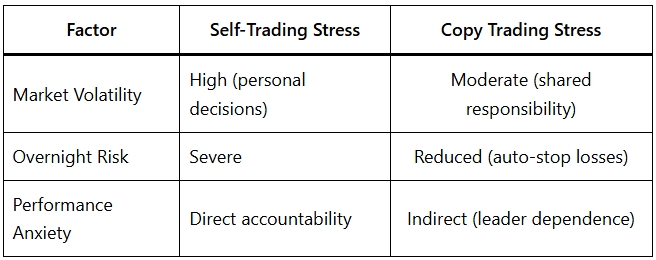
- Emotional Stress: Losses incurred by manual trading compared to copy trading can be psychologically taxing.
🔗 Related Reads:
Disclaimer: The information in this article is for educational purposes only and does not constitute financial, investment, or trading advice. Copy trading carries substantial risks, including the potential loss of your entire invested capital. Past performance of copied traders or strategies is not a reliable indicator of future results. You may be replicating high-risk trades, overleveraged positions, or strategies incompatible with your financial goals. Always conduct independent research into a trader’s historical performance, risk metrics, and strategy before copying them. Never invest funds you cannot afford to lose. Consult a licensed financial advisor to ensure copy trading aligns with your risk tolerance, financial objectives, and regulatory requirements in your jurisdiction. This article does not endorse specific traders, platforms, or strategies, and all trading decisions remain your sole responsibility.
Pros and Cons of Copy Trading
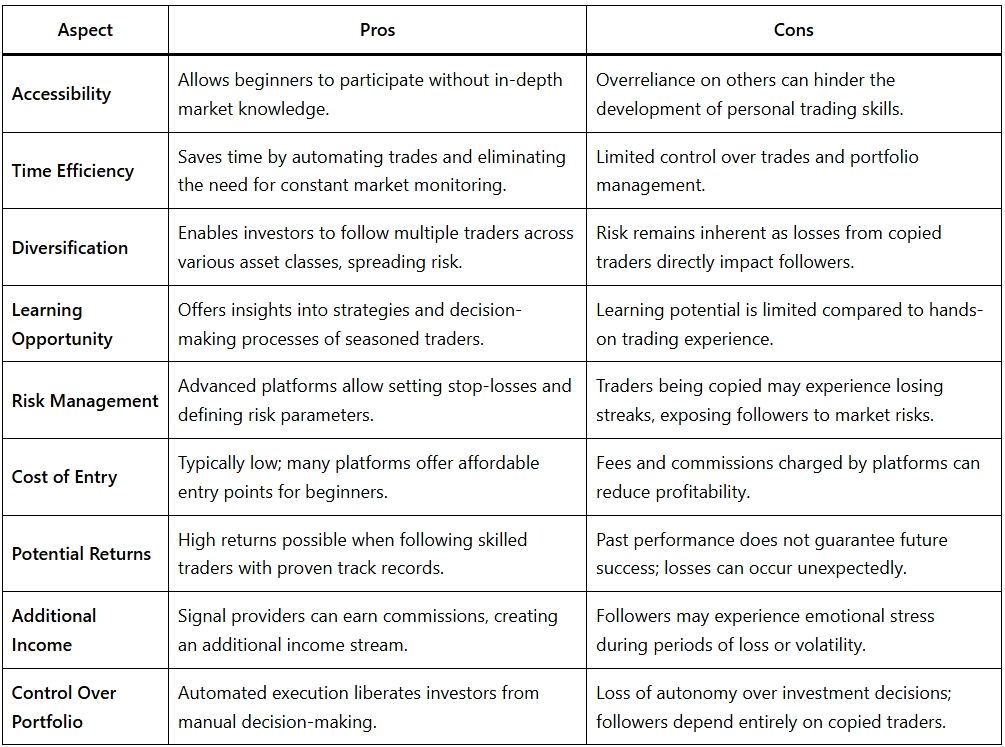
Below is a clear differentiation of the advantages and disadvantages of copy trading:
– Paul Tudor Jones
“Don’t focus on making money; focus on protecting what you have.”
Why Copy Trading is Popular With Traders
Copy trading appeals to investors who:
- 🧠 Avoid complex learning curves: Skip mastering forex jargon, technical analysis, or risk management frameworks
- ⏳ Lack time: Automate trading without daily market monitoring
- 💸 Minimize “tuition fees”: Reduce losses from trial-and-error learning
- 🆓 Access expertise for free: Follow proven traders without subscription fees
- 🛠️ Refine strategies risk-free: Test copied trades on demo accounts before live execution
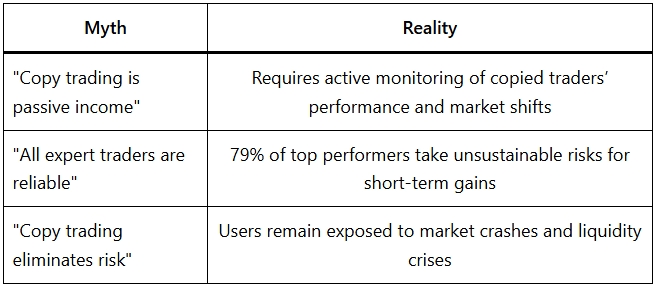
Copy Trading Myths vs. Reality
Best Copy Trading Strategy for Safety & Returns
- Diversify Leaders: Follow 5-10 traders across uncorrelated assets (forex, commodities, indices)
- Verify Track Records: Prioritize traders with >3 years of consistent returns (not just 6-month spikes)
- Use Demo First
- Set Multiplier: Allows traders to adjust their trade volume based on the signals provided.
- Monitor Sentiment: Pair copy trading with sentiment tools
Trading Stress & Emotional Impact
Copy trading reduces decision fatigue:
Conclusion
- ✅ Pros: Accessibility, diversification, and learning opportunities
- ❌ Cons: Hidden risks, leader dependency, and fee structures
- 🔄 Hybrid Approach: Combine copied trades with 20-30% self-managed portfolio for balanced exposure
Copy trading presents a unique opportunity to engage with financial markets by leveraging the expertise of seasoned traders. However, it’s essential to approach this method with realistic expectations, a clear understanding of the associated risks, and a commitment to continuous learning. Platforms like TradingCup provide the tools and community support necessary to navigate the copy trading landscape effectively.
Copy Trading FAQs
What are the disadvantages of copy trading?
Disadvantages of copy trading include dependency on trader performance, potential for losses, limited control over trades, and platform fees that can erode profits. Newbies may also find the temptation to pick high-risk signal providers irresistible. Always remember “past performance does not guarantee future success” and therefore it is important to consider risk management when following seemingly competent traders.
Is copy trading a good option?
Copy trading can be a good option for beginners seeking exposure to financial markets without extensive knowledge. It can save time and offer learning opportunities by observing experienced traders. Evaluate your own goals and risk before engaging in it.
What is the success rate of copy trading?
The success rate of copy trading varies widely depending on the skill of the followed trader and market conditions. Returns aren’t guaranteed. Proper research and strategic selection can improve your chances of success. Diversifying traders and setting strict stop-loss parameters will protect your capital.
What are the pros and cons of social trading?
Social trading, like copy trading, allows users to follow and replicate trades of others. Pros include learning, accessibility, and community interaction. Cons include potential for herd mentality, lack of control, and dependency on other traders’ decisions.
What are the risks of copy and paste?
Copy and paste trading (a basic form of copy trading) bears market risks, and potential mistakes if trades are not manually entered correctly. Ensure accurate execution when replicating trades and verify all trade details.
Do copy traders get paid?
Yes, successful copy traders (signal providers) typically receive commissions or a percentage of the profits from followers. This incentivizes them to perform well but doesn’t guarantee their success.
How do you strategise in copy trading?
In copy trading:
- Diversify: Follow multiple traders across different asset classes.
- Research: Analyze trader track records, risk scores, and trading styles.
- Demo First: Use demo accounts to test copied strategies.
- Stop-Losses: Set stop-loss orders to limit potential losses.
- Monitor: Regularly review and adjust your portfolio based on market conditions.
Is copy trading illegal?
Copy trading is generally legal but must comply with financial regulations in your jurisdiction. Ensure the platform is regulated and licensed.
How to copy trade like a pro?
To copy trade like a pro: choose profitable traders, perform fundamental and technical analysis, monitor the market actively, use stop-loss orders, and learn from the signal provider.
What is the commission for copy trading?
The commission for copy trading varies by platform and can include a percentage of profits, a flat fee, or a spread markup. Understand the fee structure before participating.
What are the risks of copy trading?
Risks of copy trading include market volatility, potential for losses, dependency on trader performance, and platform fees. Remember that even experienced traders can incur losses.
Which is the best site for copy trading?
The “best site for copy trading” depends on individual needs, but popular choices include platforms known for a wide selection of signal providers, competitive fees, and user-friendly interfaces.
What are the negative effects of trading?
Negative effects of trading include emotional stress, financial losses, addiction, and opportunity cost.
What are the bad sides of trading?
The bad sides of trading include sleepless nights, unexpected expenses, anxiety and stress.
Leveraging these answers in your copy trading content can improve its visibility and relevance in both traditional search engines and AI-driven platforms.
For more detailed insights on developing daily trading routines, risk management, and effective position sizing strategies, explore additional articles on Trading Cup. Our trading experts at ACY and FinLogix are also great resources to guide your journey towards trading excellence.

Discover Our Best Trading Signals
At Tradingcup, you can browse through a selection of signals and review past performance before you decide to copy.
Become A Signal Provider
Share your expertise and become a signal provider so other traders can copy your trades.
Stay tuned to our blog for more trader spotlights and leaderboard updates.
Trading involves risks.
Visit the Tradingcup blog through the link below for more updates: https://www.tradingcup.com/learn
For further reading, visit acy.com